
Local Wellness
Lake-Season Wellness Habits for Forest Lake Summer Weekenders
5D Wellness Team·10 min read·October 5, 2026
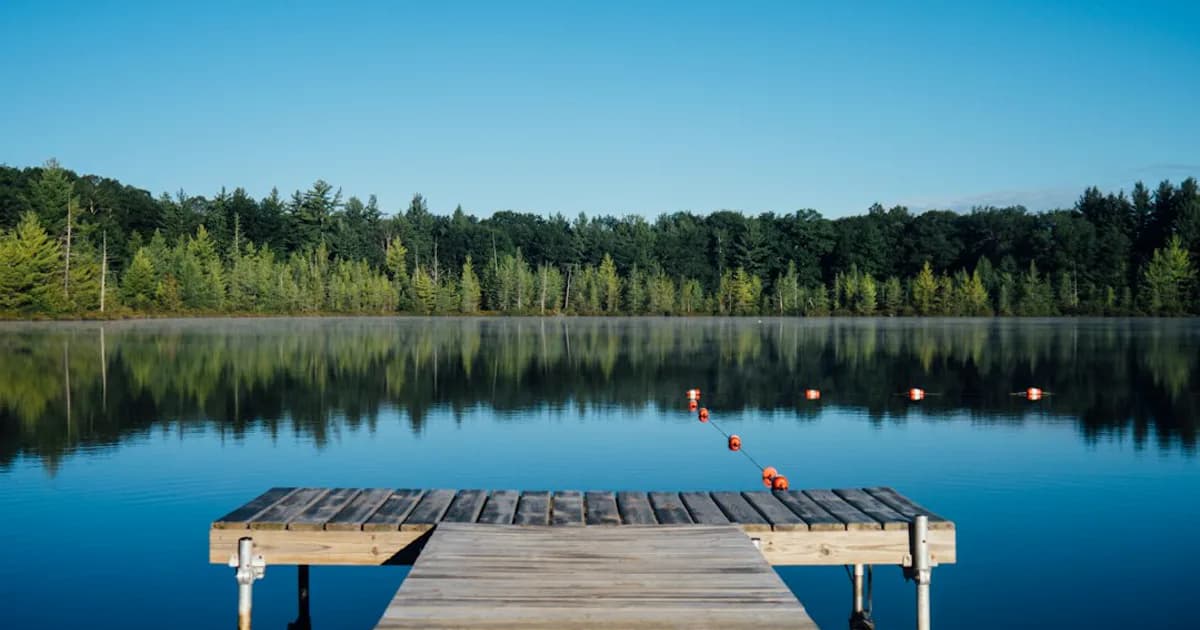
Lake season in the North Metro is short, loud, and genuinely great, and it asks more of your body than most of us credit. If your summer runs on weekends at Forest Lake — or Coon Lake, Linwood, East Twin, Martin — you know the Monday feeling. Sun-tired. Stiff in the shoulders. Four nights of not-quite-enough sleep. Good lake season wellness around Forest Lake isn't about doing less of what you love. It's about building a reset small enough that you'll actually repeat it ten weekends in a row.
Here's what a weekend on the water costs you, how to handle hydration and sun while you're out there, and where an infrared sauna or cold plunge fits into Sunday evening — written for folks driving in from East Bethel, Oak Grove, Ham Lake, and St. Francis.
What a Lake Weekend Actually Asks of Your Body
The load nobody counts
Nobody logs a lake weekend as a workout, but look at what's in it. Tubing and wakeboarding are real exertion — bracing, gripping, absorbing chop for as long as your legs hold out. Paddling a windy bay is steady-state work. Then everything around the fun: backing the trailer down the launch, hauling coolers up the dock stairs, six hours in a boat that won't stop moving.
Stack heat on top of that. Mayo Clinic and Harvard Health describe the same early warning signs when heat starts to win: muscle cramps, fatigue, weakness, and nausea. Easy to write off as just a long day in the sun. That's exactly why they're worth naming. If anyone on the boat feels off — even a little — get to a cooler spot, stop, and drink cool fluids.
Why the North Metro version is its own thing
Up here the lakes are close. Mostly an advantage — but it means a Forest Lake weekend has no travel days to slow it down. You launch Friday after work and the loop keeps going, late sunsets pushing bedtime past whatever anyone planned. By Sunday evening it's the only recovery window left, and most people spend it unloading the truck.
Hydration That Holds Up From Friday Launch to Sunday Haul-Out
Stop counting ounces, start reading signals
Rigid "drink X ounces" advice falls apart on a boat. Mayo Clinic emergency physician Dr. Michael Boniface suggests something more usable: watch thirst, dry mouth, and the frequency and color of your urination, then adjust. Darker or less frequent means drink more. Want a number to anchor to? Harvard Health notes that less-active people may need 10 to 12 cups of water a day in hot conditions, and anyone exerting themselves needs more.
The lake-specific traps
Two things make this harder on the water than in your own yard. First, the drinks of choice work against you: alcohol and caffeine both act as diuretics, and alcohol also interferes with temperature regulation. A cold beer on a hot pontoon isn't a crime, but it isn't hydration either.
Second, water sports hide your sweat loss — you're wet all afternoon, so you never get the soaked-shirt cue. The fix: everyone gets a labeled bottle, refilled at every dock stop, plus an electrolyte drink after the longest stretches, since sweating costs you sodium and potassium too.
One habit that's easy to skip when the goal is maximum water time: build rest periods into the day rather than going continuously. Twenty minutes in the shade with a water bottle isn't lost lake time — it's what lets you still be enjoying yourself at seven o'clock.
Sun and Heat Strategy on Open Water
The 10 a.m. to 2 p.m. window
Open water gives you almost no shade and bounces light right back up at you. Harvard Health's guidance is to limit direct exposure between 10 a.m. and 2 p.m., when UV rays are strongest, and to layer defenses rather than lean on any one: a wide-brimmed hat, light long sleeves, broad-spectrum sunscreen, and sunglasses screening 99% to 100% of UVA and UVB. Reapplying matters double on a lake day — you're in and out of the water every twenty minutes.
Timing the hard stuff
Harvard also advises shifting activity to early morning or evening, and easing off when it's humid and above 80 to 85 degrees. That translates cleanly. Take the paddle or the first ski run early, when the water's glass anyway. Spend midday under the canopy or swimming rather than working. Save the second round of effort for evening.
Who needs extra margin
Heat doesn't land on everyone the same way. Both sources flag older adults, anyone on medications that affect sweating, people already dehydrated, and younger, less-conditioned people who go hard in a sudden hot spell. If that's someone in your crew, build their breaks in first.
The Sunday Reset: Infrared Sauna After a Lake Weekend
Why heat after a hot weekend isn't a contradiction
People raise an eyebrow at this one, fairly. The difference is control. The weekend's heat was ambient, unplanned, and dehydrating; a sauna session is a deliberate twenty minutes with water in your hand and a door you can open. Cleveland Clinic family medicine provider Dr. Amy Zack describes the reported upside as less stress and anxiety, better sleep quality, and muscle soreness that commonly eases with heat, noting that the rise in heart rate and sweating mimics light exercise.
The evidence deserves a straight read, though. A systematic review of 40 studies and 3,855 participants found real promise but concluded there is insufficient evidence to recommend a specific temperature, frequency, or duration for any particular outcome — most studies were small, and over half came from one research group. The infrared protocols ran roughly 45 to 60°C for 15 to 30 minutes, a few times a week. A starting point, not a prescription.
How to actually run the session
Dr. Zack's practical guidance is 15 to 20 minutes, with beginners starting near five. Infrared cabins run about 110 to 135°F versus 150 to 195°F for traditional, with no clear sign either format wins. Drink water or an electrolyte beverage before and after — dehydration is the main risk, and any weight the scale shows afterward is water, not fat. Step out early if you feel dizzy, weak, or short of breath. Our infrared sauna session is about twenty minutes from the Forest Lake boat launches, and Sunday evening is usually quiet — which is the whole point.
Cold Plunge After Tubing, Wakeboarding, and Paddling
What the evidence supports
Cold water has a real case behind it and a lot of hype on top. The useful version: pooled trial data show reduced muscle soreness at 24, 48, 72, and 96 hours after exercise, though findings on other recovery markers are mixed and some studies find no effect. Cleveland Clinic adds that some people report lower stress and sharper alertness, with better sleep quality noted among endurance athletes.
Dialing it in
Numbers matter more here than with sauna, because cold gets risky faster. Cleveland Clinic sports medicine physician Dr. King advises staying out of water colder than 40°F, starting between 50 and 59°F, capping any session at five minutes, and limiting beginners to one or two minutes about twice a week. Rewarm promptly — dry off, get into warm clothes, and a sauna session is a good way to come back up to temperature.
One timing note if you lift: cold immersion too soon after strength training can quiet the muscle-building signals that follow, so leave about four hours between the two when growth is the goal. Our cold plunge at 5D Wellness holds a set temperature, which is what makes any of this repeatable — the same logic behind how Andover runners use cold plunge for race recovery.
Honest limits
Cold plunging isn't for everyone, and the list is specific. Cleveland Clinic names heart disease, high blood pressure, diabetes, peripheral neuropathy, poor circulation, and pregnancy as reasons to talk with a healthcare provider first or skip it — cold constricts blood vessels, raising blood pressure and making the heart work harder. Dr. King's framing is the one to keep: plunges are one option among many, and "they're not essential to a training program."
Frequently Asked Questions
How soon after a lake weekend should I do an infrared sauna session?
Sunday evening or Monday works for most people. The point is a calm, warm window after two days of sun and water — not hitting a deadline. Cleveland Clinic's guidance is 15 to 20 minutes, with beginners starting around five. Drink water before and after, and step out early if you feel dizzy or unusually weak.
Is a cold plunge better than just jumping in the lake?
They feel similar but aren't the same thing. Lake temperature drifts with the weather and with how deep you're standing, so you can't dial it in. A plunge tub holds a known temperature, which matters because Cleveland Clinic suggests beginners stay between 50 and 59°F, avoid water below 40°F, and cap sessions at five minutes.
How much water do I actually need on a hot day at the lake?
More than a fixed number captures. Harvard Health notes less-active people may need 10 to 12 cups a day in hot conditions, and anyone exerting themselves needs more. Watch thirst, dry mouth, and how often and how dark your urine is. Beer and iced coffee act as diuretics, so they don't count.
Can I do sauna and cold plunge in the same visit?
Yes, and plenty of people prefer the contrast. Cleveland Clinic mentions sauna as a reasonable way to rewarm after cold immersion, which is the sequence most visitors land on naturally. One caution: cold immersion within about four hours of strength training may blunt the muscle-building signal, so if you lifted that morning, lead with the sauna.
Building a Lake-Season Rhythm You'll Keep
Minnesota summer doesn't hand you many weekends, which is why the reset matters more than any single heroic effort. Hydrate by signal instead of by rule. Respect the midday UV window and take the shade when it's offered. Then give Sunday evening back to your body — twenty minutes of warmth, a short plunge if it suits you, and an earlier bedtime than the weekend wanted.
Done once, that's a nice evening. Done every weekend from June through August, it's the difference between limping into Labor Day and still feeling like yourself — the same logic as building a recovery routine you'll actually keep. When you're ready, book a Sunday-evening slot and see how the next Monday feels.
This article is for general wellness and educational purposes only and is not medical advice. 5D Wellness services are not a substitute for professional medical care. Results vary by individual. Consult a qualified healthcare provider before starting any new wellness practice, especially if you are pregnant or have a medical condition.