
Recovery & Performance
Building a Recovery Routine for Gym-Goers: An East Bethel Guide
5D Wellness Team·11 min read·September 26, 2026
The Part of Training That Quietly Falls Off
Most people around East Bethel who lift regularly have the hard part handled. You show up. You add weight. What tends to slip — especially now, as the North Metro trades evening daylight for indoor training season — is everything that happens in the hours between sessions.
That gap is where a recovery routine for gym-goers earns its keep. Not a shelf of supplements or a garage full of equipment, but a repeatable weekly pattern: easy movement most days, heat when you want circulation and comfort, cold on the days it won't work against your strength training, and enough sleep underneath all of it to make the rest count.
Here's what belongs in that routine, the one timing mistake that can undercut your lifting, and a sample week you can copy.
Why Recovery Is the Half Most Lifters Skip
Training is stress and breakdown by design. Cleveland Clinic sports medicine specialist Dr. Lauren Wichman puts it plainly — during exercise, your body is in a state of stress and breakdown. The adaptation you're training for happens in the gap between sessions, not during the set. Shortchange that gap and the signs show up fast: soreness that hangs around three days instead of one, flat sessions, a nagging tightness that never settles.
Worth being straight about what recovery work does. A sauna session or a cold plunge supports how you feel and how ready you are to train again. It's not a shortcut around the work, and how much any one person notices will vary.
Start With Active Recovery, Not Gadgets
Before anything you have to book or buy, there's active recovery — low-intensity movement following hard exercise rather than complete rest. Walking, easy cycling, swimming, yoga, mobility work, foam rolling. Wichman describes it as paring back from what you usually do while continuing to move in a way that's comfortable.
Cleveland Clinic points to three slots: between sets, where walking or foam rolling beats sitting on your phone; as a cool-down, five easy minutes after your last set; and on rest days, where low-impact movement in a different modality keeps you loose without loading what you just worked.
The payoff is unglamorous and real: less soreness and stiffness, better circulation, improved range of motion, lower injury risk in the workouts that follow. None of it needs equipment. A loop around the block, a walk on a Ham Lake trail, an easy spin on the bike you already own.
There's also a case for skipping it. Injured, sick, badly under-slept, or simply not up to moving? Passive recovery is the better call — sleep, massage, or time in the heat or the cold. See how wellness therapies fit into an active recovery day.
Where the Infrared Sauna Fits After Lifting
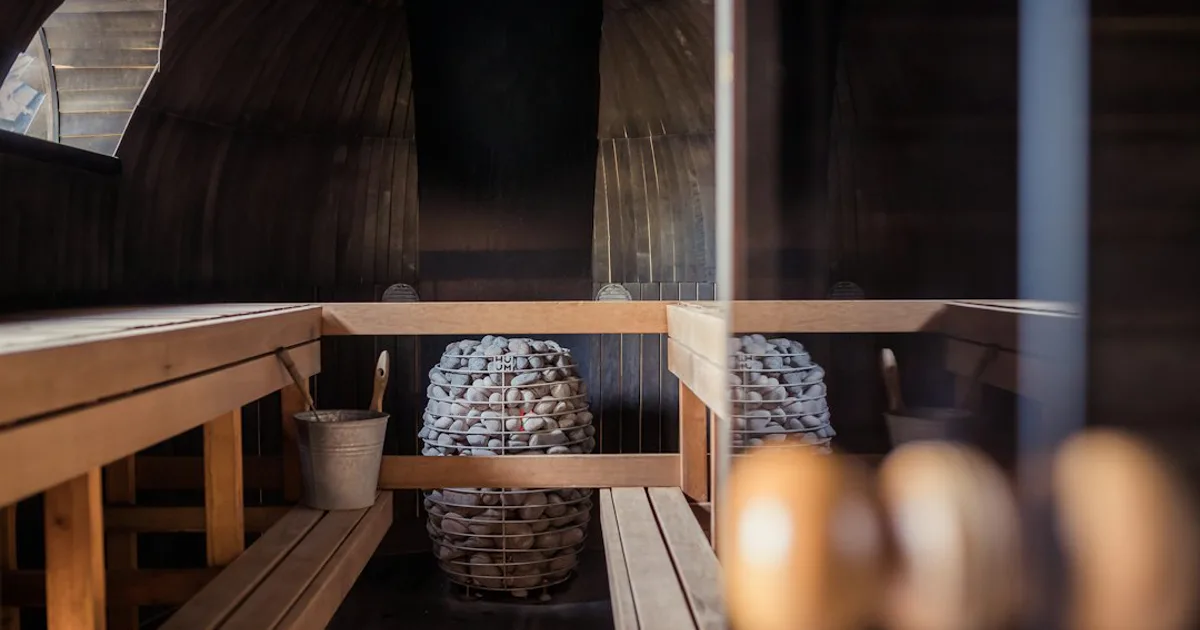
An infrared sauna is easier to sit in than the traditional kind, which matters when you're already tired. Infrared cabins run roughly 110°F to 135°F, against 150°F to 195°F for a conventional sauna, because the heat lands on your skin rather than warming all the air. Cleveland Clinic's Dr. Melissa Young notes this can be much more comfortable while delivering a similar sort of benefit.
For a lifter, the appeal is circulation. Heat widens blood vessels and lifts your heart rate to something comparable with a moderate-paced walk. One finding speaks directly to a training context: in a controlled comparison, an infrared sauna session after resistance exercise blunted the drop in jump performance and left soreness rated less severe than passive recovery did.
A caveat worth stating plainly: evidence for traditional sauna bathing as a standalone recovery method is thinner than most gym conversations suggest. Some of the measured upside in endurance athletes looks like plasma volume changes rather than recovery itself.
Practically: start around 110°F for five to ten minutes and build. Cap a session at 30 minutes, keep to three or four visits a week, bring water in. Skip it if you're pregnant, currently ill, or heat-intolerant, and check with your provider first if you have a medical condition. Our guide to adding a sauna session to leg day walks through one version.
Cold Plunge — Timing Is the Whole Game
Cold works, and the mechanism is simple. As Cleveland Clinic's Dr. Dominic King explains, the cold constricts blood vessels, temporarily reducing swelling and inflammation. Reviews back the soreness effect against passive rest, with research protocols clustering around 11–15°C for 11–15 minutes.
Beginner-safe numbers, per King: water between 50°F and 59°F, never below 40°F, one to two minutes to start, a five-minute ceiling, one or two sessions a week. For more, see how cold your plunge actually needs to be.
Now the part that rarely comes up between sets. The anti-inflammatory response that dulls your soreness also quiets the signalling your body uses to build muscle after a strength session. King's practical suggestion is to keep cold plunges outside roughly the four-hour window following a muscle-focused workout, and to favour rest days instead. So: plunge on your off days or after conditioning — not straight off your heaviest squat session. If size is the goal, that scheduling choice matters more than the water temperature.
Beyond soreness, a 2025 review of 11 studies covering 3,177 participants found lower stress — but only from about 12 hours after immersion — and better sleep reported by men, not women. It found no consistent effect on mood or immunity, a useful corrective to how cold plunging often gets sold.
The cautions are real. If you have a heart condition, high blood pressure, diabetes, poor circulation, neuropathy, or you're pregnant, talk to your provider first. Get out if you feel lightheaded. For a slower ramp, there's a beginner's cold plunge routine built for gym-goers.
Red Light and Massage as Targeted Add-Ons
Red light therapy works best stacked onto a visit you're already making — ten or fifteen minutes before or after a sauna session costs almost nothing. We covered the dosing question in how long and how often to use red light. Keep expectations modest.
Massage deserves an honest read. Among elite endurance athletes, sports massage has not been shown to improve performance, though it may improve flexibility and reduce delayed-onset soreness. What those athletes actually do is 30 to 60 minute hands-on sessions, once or twice a week. For most gym-goers, one session during a heavy block — aimed at whatever's chronically tight, usually hips or upper back — is the version that fits a real budget.
Sleep and Hydration Do More Than Any Gadget
Here's the uncomfortable hierarchy. In a survey of 153 elite track and field athletes, the most-used recovery methods were sauna at 96.7%, massage at 86.9%, daytime napping at 81%, and nine or more hours of night sleep at 61.4%. They stack them rather than pick one — the most common combination was massage plus sauna plus a nap plus long night sleep. One detail worth stealing: a 90-minute nap opportunity outperformed a 40-minute one for both cognitive and physical performance.
Hydration is the other free lever, and it matters more once heat enters the picture: water going in, electrolytes after a hard sweat. The blunt version of all of this — if you're sleeping six hours a night, fixing that will do more for you than any plunge tub you could buy.
A Sample Week for a North-Metro Lifter
Four lifting days, two studio visits, everything else easy. A template, not a prescription.
- Monday — Lift, lower body. Ten-minute walk afterward.
- Tuesday — Lift, upper body. Fifteen minutes in the infrared sauna after the session.
- Wednesday — Active recovery. A walk, some mobility work, or an easy spin.
- Thursday — Lift, lower body. Skip the plunge tonight — that's the four-hour window.
- Friday — Rest day. Two-minute cold plunge, then rewarm in the sauna. Add red light if you're already there.
- Saturday — Lift, upper body, or conditioning.
- Sunday — Long sleep. Massage if you're deep in a heavy block. Otherwise, full rest.
Shift it around your shift work, the hockey schedule, the kids. The version you follow beats the version that looks best on paper. And the honest argument for a recovery membership at 5D Wellness is friction: recovery only does anything when it's repeated, and it gets repeated when showing up is easy.
Frequently Asked Questions
How soon after lifting should I use a cold plunge?
If building muscle is your main goal, leave a gap. Cleveland Clinic's guidance is to avoid cold plunges within about four hours of a muscle-focused workout, because the anti-inflammatory effect that dulls soreness also quiets the signalling your body uses to adapt. Rest days are the better slot. If you're plunging mainly to cool off, timing matters much less.
Can I use the sauna and the cold plunge in the same visit?
Yes, and plenty of North Metro members do. A common pattern is heat first, a short plunge, then rewarming — Cleveland Clinic notes some people deliberately follow a plunge with sauna time to bring core temperature back up faster. A 10 to 15 minute infrared session plus a one to two minute plunge is already a real recovery session.
How many recovery sessions a week is enough for a regular lifter?
Two to four intentional sessions a week covers most people training three to five times. Cleveland Clinic suggests capping infrared sauna visits at three or four weekly, and starting cold plunges at one or two. Layer those onto daily low-effort active recovery and you have a routine you can sustain through a Minnesota winter.
Do I still need recovery work if I only lift twice a week?
The volume is lower, so the need is lower — but not zero. If you're sore for three days after every session, that's a signal your recovery is lagging your training, not that you should train harder. Start with the free basics: sleep, water, a walk the day after. Add heat or cold when you want the comfort and the routine.
Putting It All Together
A recovery routine for gym-goers is mostly sequencing, not equipment. Easy movement most days. Heat when you want circulation and comfort. Cold on the days it won't compete with your strength work. Sleep underneath all of it.
Build it now and it carries you through a Minnesota winter training block — the stretch where routines usually come apart. To try the pieces in one place, book a session at the East Bethel studio and see what your body responds to.
This article is for general wellness and educational purposes only and is not medical advice. 5D Wellness services are not a substitute for professional medical care. Results vary by individual. Consult a qualified healthcare provider before starting any new wellness practice, especially if you are pregnant or have a medical condition.