
Local Wellness
Beating Cabin Fever: A Deep-Winter Wellness Day Plan for Anoka County
5D Wellness Team·10 min read·October 2, 2026
By the second week of February, East Bethel takes on a particular quality. The sun's gone before you finish dinner. The driveway banks are over your head. And somewhere in there you notice you haven't been anywhere that isn't work, the grocery store in Ham Lake, or your own living room since New Year's. Most Minnesotans have a name for that flat, restless feeling, and they use it without thinking: cabin fever. The honest fix isn't toughing it out until April. One day, structured on purpose — a deep winter wellness day in Anoka County — does more than six more weeks of waiting.
Why Deep Winter in Anoka County Wears You Down
The daylight math is real, not a mood
February feels different from October even when the thermometer agrees. As Harvard Health puts it, the sky gets bright later and goes dark earlier while your work schedule doesn't move an inch. Your internal clock takes its cues from a day that shifted. Your alarm didn't. Latitude makes it worse, which isn't great news up here — Harvard also notes that people in northern states, where there's noticeably less light in fall and winter, tend to be affected more by seasonal mood change. And indoor light is no substitute. A cloudy winter day outside runs about 4,000 lux, a sunny one 50,000 or more, while your kitchen with every bulb burning is a small fraction of either.
Why late January and February hit hardest
Early winter has structure built into it — holidays, hockey, visitors coming through. By late January all of that is over, the snow has stopped being novel, the roads are still bad, and the calendar is empty. That's the stretch people around Anoka, Andover and Cedar actually feel. If you split the season with somewhere warmer, our winter recovery routine covers the travel side of the same problem. One framing note before the plan: what follows is about comfort and routine, not a diagnosis.
Morning: Get Light on Your Face Before 10 a.m.
The window seat beats the overhead lights
Open every blind before you do anything else, then eat breakfast facing the brightest window in the house. If the sun's up and the sidewalk is passable, fifteen minutes actually outside beats anything you can do indoors — even overcast daylight is in a different category than a lamp.
If you own a light box, use it correctly
Plenty of North Metro households own one and use it badly. The parameters are specific. Harvard's guidance is that the box should emit at least 10,000 lux, used about 30 minutes a day, ideally before 10 a.m. Put it in front of you or just off to the side, roughly a foot away, eyes open but not staring into it. Splitting the 30 minutes across the morning is fine. The cautions are real too — headaches and irritability happen, evening use can disturb sleep, and some medications increase light sensitivity, so ask your provider first if that applies to you.
Midday: The Thirty-Minute Movement Block
Harvard cites roughly 30 minutes of daily movement for meaningful stress relief and mood benefit, and winter is exactly when that habit quietly disappears. Put it at midday, when whatever daylight exists is strongest. Outside if conditions allow: a plowed neighborhood loop, the Rum River trails near Anoka, a walk around the block in Cedar or Oak Grove. If it's minus ten with wind, the indoor version counts — stairs, a long loop through a store in Blaine, a mobility video in the basement. The thirty minutes is the point. The scenery isn't.
The same piece notes that even 10 minutes of mindfulness every other day is worthwhile. Short sessions aren't a watered-down version of the practice.
Afternoon at the Studio: The Core of Your Deep Winter Wellness Day
Infrared sauna as screen-free mental recovery
This is the anchor of the day, and the research on why people actually go is more interesting than the usual list of benefits. In a survey of 588 regular sauna bathers, the leading motivations were mental recovery and social togetherness — not fitness, not detox. Women ranked mental recovery first and reported significant gains in sleep quality along with less bodily pain. What came up over and over was the screen-free part. Participants described the session as meditation-like, a stretch of time where reflection was possible because nothing else could happen. In February that might be the most valuable thing on offer. Book our infrared sauna in East Bethel, plan on twenty to thirty minutes, bring more water than you think you need, and leave your phone in the locker.
Red light and salt for the low-effort middle of the day
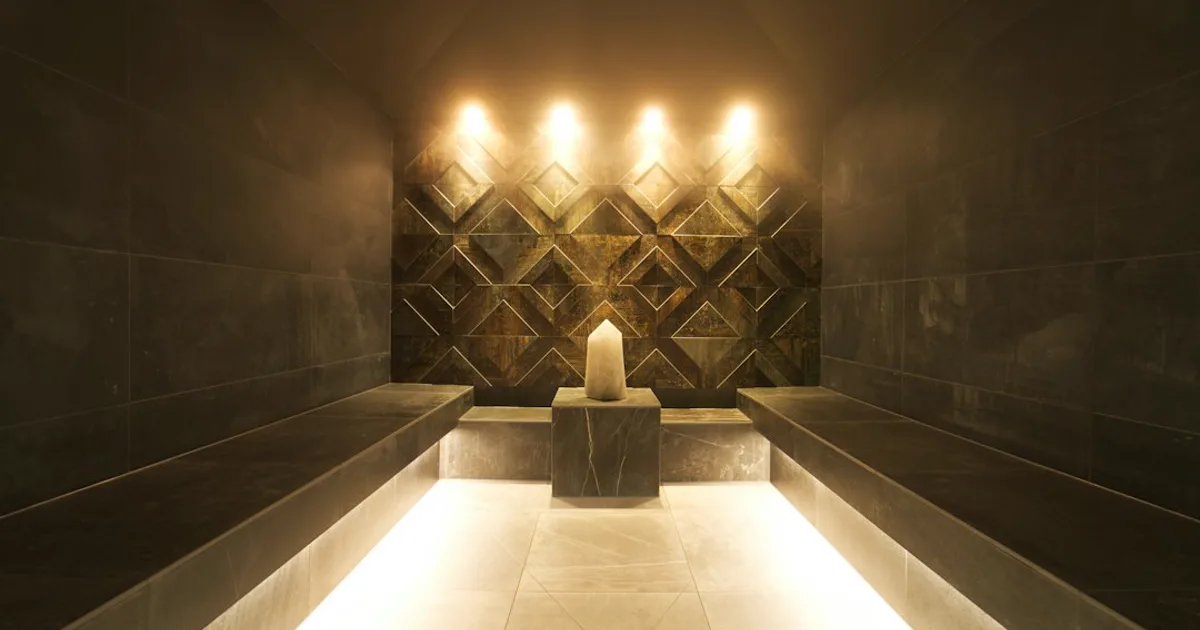
Some winter days you've got no appetite for anything strenuous, and the plan still works. Red light is the easy add-on — you sit, it's warm, it asks nothing of you. We wrote more about red light therapy through East Bethel's dark months for people working from home all winter. The salt room is the other quiet option, and it makes sense when the furnace has been running since early October and the air in the house has gone dry.
Why a booked appointment beats good intentions
Harvard lists social connection alongside movement, nutrition and mindfulness as a core winter pillar, and the sauna research agrees — men in that study ranked social togetherness first, describing the sauna as a place where conversations flow and stress stays outside. Bring someone from Ham Lake or Andover who also hasn't left the house in three weeks.
The Contrast Round: Adding Cold on Purpose
Beginner parameters, straight from Cleveland Clinic
If you add cold, do it by the numbers. Cleveland Clinic suggests beginners start between 50 and 59 degrees Fahrenheit, one to two minutes, building gradually. Never below 40 degrees. Never longer than five minutes. Once or twice a week at first. Get out immediately if you feel lightheaded — as their sports medicine physician puts it, cold water can become dangerous quickly, so don't push through what doesn't feel right. Dry off and warm up right away, which is why sauna time straight after a plunge makes sense. Our cold plunge is set up for that sequence, and if you want it as a daily thing rather than a monthly reset, we covered a morning plunge habit separately.
Hot, cold, or both
Cleveland Clinic's hydrotherapy overview describes warm immersion and steam as supporting muscle relaxation, circulation and sleep quality, while cold constricts blood vessels and fits better right after an acute strain. In the sauna survey, alternating heat and cold produced the strongest wellness perceptions of anything participants described.
Timing, and who should ask first
Two caveats. Cold within about four hours of strength training can blunt the muscle-building signal, so if you lift, put the plunge on a rest day or much later in the evening. And it isn't for everyone: with heart disease, high blood pressure, diabetes, poor circulation or peripheral neuropathy, or during pregnancy, talk with your healthcare provider before a first session.
Evening: Protect Your Sleep, Then Put It on the Calendar Again
The last few hours matter as much as the rest. Dim the lights after dinner, take a warm shower or bath, and leave the light box alone — evening use is where it starts interfering with sleep. Hold a consistent bedtime, because a thoughtful day undone by a 1 a.m. scroll is just a day.
Then do the part almost everyone skips. One good day is a reset; a repeating day is a winter that feels different. Pick a slot that survives contact with real life — second Saturday of the month, every other Sunday — and book your winter day while the motivation is still there. If you'd rather have the repetition built in than renegotiated, a membership is the simpler path.
Frequently Asked Questions
What is cabin fever, exactly?
Cabin fever is the everyday name for the restlessness, irritability and low motivation that build when weather keeps you indoors for weeks. It isn't a clinical diagnosis. The pressure underneath it is documented, though: shorter days shift your internal clock while your schedule stays put, and northern-latitude residents report more seasonal mood change than people farther south. If low mood lasts most of the day, most days, or sleep and concentration change in ways that won't lift, that's a conversation for your healthcare provider rather than a wellness fix.
When is the best time of year to plan a deep-winter wellness day in the North Metro?
Late January through February is when most people in Anoka County feel it hardest — holidays over, novelty gone, sunrise still landing after 7:30 a.m. Ideally you don't wait for the slump. Harvard Health notes that starting bright-light exposure in autumn, before symptoms peak, works better than starting in midwinter, and the same logic applies to the habit: put the first day on the calendar in November so the routine exists by the time February gets long.
How cold should a cold plunge be if I have never done one?
Cleveland Clinic suggests beginners start between 50 and 59 degrees Fahrenheit for one to two minutes, working up gradually — never below 40 degrees, never longer than five minutes, once or twice weekly until tolerance builds. Get out immediately if you feel lightheaded, then dry off and warm up, which is why pairing a plunge with sauna time makes sense. With heart disease, high blood pressure, diabetes, poor circulation or peripheral neuropathy, or during pregnancy, check with your healthcare provider before a first session.
Can I build a deep-winter wellness day at home instead?
Much of it, yes. Morning light at a window, a thirty-minute walk, ten quiet minutes, a warm bath and a consistent bedtime all cost nothing. Two things are harder to replicate: the equipment, and the fact that you actually show up. A booked appointment in East Bethel is harder to skip than a plan to sit quietly in your living room.
Put It on the Calendar
A deep winter wellness day in Anoka County isn't an indulgence. It's a structure: light early, movement at midday, heat and quiet in the afternoon, cold if you want it, sleep protected at night. Every piece is ordinary on its own. Stacked into one deliberate day, they add up to a February that's survivable instead of just long. The stretch is coming either way — the only variable is whether anything is on the calendar when it arrives. We're in East Bethel, a short drive from Ham Lake, Andover, Blaine, Cedar, Anoka and Isanti.
This article is for general wellness and educational purposes only and is not medical advice. 5D Wellness services are not a substitute for professional medical care. Results vary by individual. Consult a qualified healthcare provider before starting any new wellness practice, especially if you are pregnant or have a medical condition.