
Cold Plunge
Where to Cold Plunge in Andover, MN This Winter
5D Wellness Team·10 min read·October 6, 2026
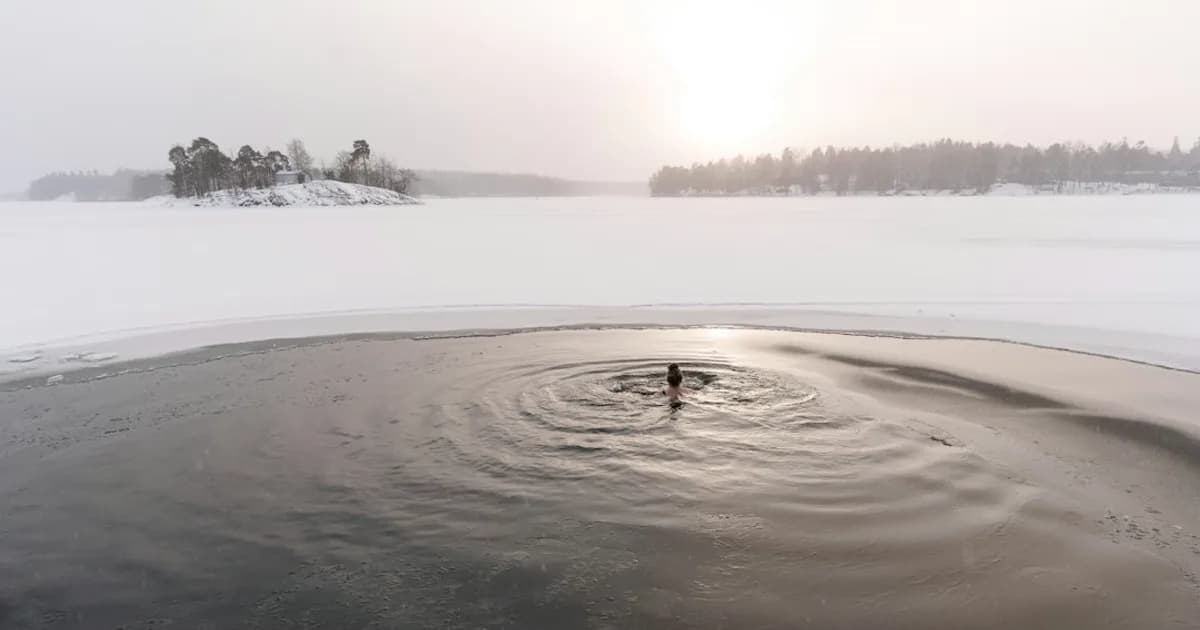
The Cold Is Free Here. Control Is the Hard Part.
It's October in Andover. The lakes still look friendly, and the first hard freeze is maybe eight weeks out. Ask about a cold plunge in Andover, MN in July and the conversation is about finding cold water at all. Ask in January and it flips — the cold is everywhere, for free, in every direction. What's scarce by midwinter is a version you can measure, repeat, and walk away from warm.
There's a real difference between a plunge you run at a known temperature for a known number of minutes and a hole cut in a frozen lake off Bunker Hills. Both are cold. Only one resembles what researchers have been studying. So here's the practical version: your three realistic options around Andover this winter, what the evidence does and doesn't support, and how to handle a first session so it ends well.
What a Winter Cold Plunge Actually Means Around Andover
The number that matters
Cold-water immersion generally means water at or below about 60 F (15 C). That's the entry point, not the target. Most cited research protocols sit lower — Harvard's cardiology coverage notes studies typically use immersion at least chest-deep in water 59 F or colder, for roughly three to twenty minutes, or cold showers of 30 to 90 seconds.
For context: a lap pool sits around 78 to 82 F, a Minnesota lake in late September might flirt with the low 60s, and a polar plunge hole in February is closer to 33 F.
Why a Minnesota winter complicates the question
Here's what catches North Metro newcomers off guard. By January, open water around Anoka County isn't at the beginner range — it's far below it. And colder isn't automatically better. Cleveland Clinic's guidance is to avoid water under 40 F entirely and, for newcomers, to start at 50 to 59 F with a thermometer in hand.
So the real question in Andover, Ham Lake, Oak Grove or Cedar isn't "is it cold enough out there." It obviously is. The question is whether you can control it — and that's what separates the three options below.
Where to Cold Plunge Near Andover This Winter
Option 1: a temperature-controlled plunge at a local studio
This is the version that matches the research, and for a first winter it's the one worth starting with. You pick the temperature. You pick the clock. And you climb out into a heated room instead of a parking lot.
The cold plunge at 5D Wellness sits in East Bethel, a straight shot up Highway 65 from Andover and an easy drive from Ham Lake, Blaine, Cedar and Oak Grove. The advantage in December isn't the water — you could find colder water for free a mile from your house. It's everything around the water: a known number on the thermometer, someone nearby who knows what a first plunge looks like, a dry floor, a warm room to sit in while your breathing settles. If you want this to become a habit instead of a story you tell once, that's the version that survives February.
Option 2: open water and backyard setups
Plenty of Minnesotans run their own version — a stock tank in the yard, a chest freezer in the garage, a cut hole on a lake they know well. For someone already acclimated, these work fine.
What you take on is worth naming out loud. Ice thickness and footing are on you. Getting out is harder than getting in, especially once your hands stop cooperating. Nobody's watching. And water that cold triggers a much sharper cold shock response — the gasp reflex is genuinely dangerous when your head is near open water. The peer-reviewed literature is blunt here: acclimate gradually, never practice alone, and warm up properly afterward.
If open water is where you eventually want to end up, build the tolerance in a controlled tub first. We went deeper on that comparison in our piece on lake-cold versus a controlled plunge.
Option 3: the once-a-year polar plunge
The Anoka County Polar Plunge — a Special Olympics Minnesota fundraiser hosted in Blaine at Lakeside Commons Park — is the big local winter cold-water event, and a genuinely good time for a good cause.
Just be clear about what it is. You run in, you come out, somebody hands you a sweatshirt, and you've got a story for the year. That's an event, not a practice. The outcomes researchers measured come from repeated short sessions over weeks, not one February morning in a costume. Do the plunge for the fundraiser; do the weekly sessions for yourself.
What the Research Actually Supports
Cold plunging has gotten loud online. The evidence is quieter than the marketing.
A January 2025 meta-analysis in PLOS One pooled 11 studies and 3,177 participants to see what holds up. Stress scores did come down — but not until roughly 12 hours after immersion, rather than in the moment. Male participants reported better sleep; female participants didn't show the same result. Cold-shower participants reported higher quality-of-life scores than controls.
The honest other half: that same analysis found no consistent evidence that cold immersion improved mood, boosted immunity, or reduced inflammation. The researchers pointed to wide variation in protocol as the central limitation and called for better-designed trials.
So why does everyone feel so good climbing out? Part of it is chemistry — cold immersion drives a sympathetic response that releases norepinephrine and dopamine, with one study recording a 250% rise in dopamine, which lines up neatly with the alertness people describe. Part of it is hormesis: repeated mild stress produces adaptive change over time, and regular cold-water practitioners show better tolerance along with lower reported tension and fatigue. The fair summary is a supportive wellness practice with early, mixed, genuinely interesting evidence behind it. Not a fix for anything.
How to Handle Your First Winter Plunge
Temperature and time
Start at 50 to 59 F and use a thermometer rather than a guess. Keep the first few sessions to a minute or two. Cleveland Clinic's ceiling is five minutes for anyone, and newcomers should go once or twice a week before building frequency.
Most people overestimate how long to stay in and underestimate how much the first thirty seconds will rattle them. We broke the timing question down in how long a beginner should actually stay in.
Breathing, and knowing when to get out
The opening of a cold plunge is a breathing problem, not a cold problem. Your body wants to gasp and then hyperventilate, and the whole skill is slow exhales until that settles. Get out if you feel lightheaded or notice discomfort beyond "this is cold." Cold water stops being manageable fast, and there's no prize for riding it out.
Rewarming — the Minnesota-specific part
This is the step people skip, and in a North Metro January it matters most. Dry off fast, get into warm clothes, and consider a sauna round to bring your core temperature back up. Shivering out to a cold truck in a wet suit is how a good session turns into a miserable afternoon — and it's the best argument for plunging somewhere with a heated room on site.
Timing around training
One note for the gym crowd: cold immersion within about four hours of a heavy strength session may blunt the muscle adaptations you were training for. Rest days or conditioning days are a better fit.
Who Should Talk to a Provider First
Cold water sets off a fight-or-flight response. Harvard's cardiology coverage describes it plainly: the shock sends adrenaline and norepinephrine into your bloodstream, raising heart rate and blood pressure, while blood vessels near the skin constrict and the heart works harder.
For most healthy adults that's a manageable stressor. For some people it isn't. Talk to your healthcare provider first — or skip cold plunging — if you have a heart rhythm disorder such as atrial fibrillation, peripheral artery disease, Raynaud's, uncontrolled high blood pressure, diabetes, poor circulation, or if you're pregnant. Our guide on who should ease in slowly covers this in depth.
Frequently Asked Questions
How cold does a cold plunge need to be in winter?
At or below about 60 F counts, and most research protocols sit at 59 F or lower. Colder isn't automatically better — Cleveland Clinic suggests beginners start in the 50 to 59 F range and avoid water below 40 F entirely. An open lake hole in January is well under that floor.
Can I just cut a hole in a lake near Andover and plunge?
People do, and a few do it well, but it's a different activity with different risks: ice thickness, footing, no supervision, and a sharper cold shock response. If open water is where you want to end up, build the tolerance in a controlled tub first and never go alone.
Is the Anoka County Polar Plunge a good way to start?
It's a great community event and a worthwhile Special Olympics Minnesota fundraiser, but it's a one-shot experience rather than a practice. The stress and sleep findings people cite come from repeated short sessions over weeks, not one February morning in Blaine.
How often should a beginner plunge through the winter?
Once or twice a week to start, sessions of a minute or two, never past five minutes. Through a Minnesota winter that cadence is realistic, especially paired with a sauna round. Consistency over several weeks matters more than any single heroic session.
Your Next Cold Morning
In an Andover winter, cold water is the easiest thing in the world to find. Control is the scarce part — and control is what turns a plunge into a practice instead of a dare. Start with a temperature you chose, a clock you set, and a warm room on the other side.
Give it a few weeks of short, boring, consistent sessions. That's where the interesting stuff happens. After that, if a hole in the ice with a few friends still sounds appealing, you'll go into it acclimated instead of hopeful. When you want to try the controlled version first, you can book a session and we'll walk you through it. It's a long winter ahead. Might as well use it for something.
This article is for general wellness and educational purposes only and is not medical advice. 5D Wellness services are not a substitute for professional medical care. Results vary by individual. Consult a qualified healthcare provider before starting any new wellness practice, especially if you are pregnant or have a medical condition.