
Massage & Bodywork
Sports Massage for Youth Hockey Players: A Blaine-Area Parent's Guide
5D Wellness Team·10 min read·September 19, 2026
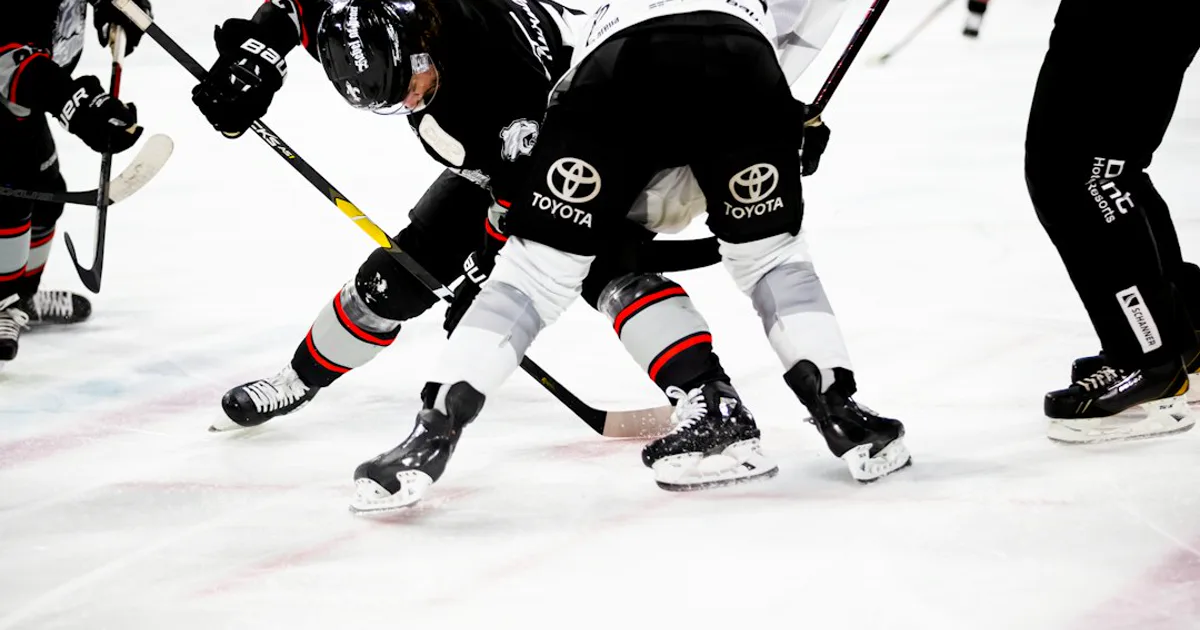
The Minnesota hockey calendar doesn't so much end as pause. Tryouts land while the lakes are still open, league play runs straight through the coldest stretch of the year, and spring tournaments push into the weeks when everyone else has started thinking about the fishing opener. If you live in East Bethel, Ham Lake, Andover or Cedar, there's a decent chance a meaningful share of your winter happens in a parking lot at the Super Rink in Blaine.
Which also means you've watched a thirteen-year-old climb into the car after practice moving like someone twice their age. Sports massage for youth hockey players comes up a lot in those lobby conversations — usually somewhere between "is this worth the money" and "does it actually do anything." Here's an honest walk through it: what a season asks of a growing body, what the research supports and what it doesn't, and how a session fits into a week that's already full.
What a Minnesota Hockey Season Asks of a Growing Body
The load is year-round now
Summer skills camps. Fall tryouts. Winter league play, spring tournaments. The "season" has quietly expanded until it covers most of the calendar, and researchers have a name for that pattern — sport specialization, meaning focused participation in a single sport for a majority of the year. In a meta-analysis of more than 3,000 young athletes, highly specialized athletes carried a relative risk ratio of about 1.37 for overuse injury compared with peers who played multiple sports.
Hockey shows up specifically in that literature, and not flatteringly: highly specialized ice hockey athletes reported more pain, lower quality of life, and lower function scores in daily activities than less-specialized players. That's not an argument against the sport — it's context for why the sore-kid-in-the-car thing is so common around here.
A load check you can actually use
Here's the rule of thumb, and it's refreshingly blunt: weekly training hours that exceed the athlete's age in years are associated with higher overuse injury risk. A twelve-year-old logging fifteen hours a week of ice time, dryland and games is past that line. Crude math, sure. But it's a number you can actually check on a Sunday night.
Growth spurts matter too. Peak height velocity lines up with higher musculoskeletal injury risk, so the stretch where your kid is suddenly outgrowing skates is often the stretch where everything aches. And sleep quietly mediates a lot of this — specialized athletes sleep worse in season, and short sleep tracks with both mood and injury risk.
The point being, recovery isn't a luxury bolted onto an already-expensive sport. It's part of managing a load that's genuinely high.
What Sports Massage Actually Is
Not the same as a spa hour
Same quiet room, different agenda. A relaxation massage is built around whole-body calm. A sports massage narrows in on the muscle groups a specific sport actually loads — for hockey, hip flexors, adductors and groin, glutes, quads, lower back, plus the upper back and neck that have been carrying a helmet and shoulder pads for two hours.
The techniques named in the research literature are effleurage, petrissage, compression, stripping strokes and tapotement: long gliding strokes, kneading, and targeted pressure, rather than one repeated motion. If you've read our piece on how massage supports winter mobility, the underlying tissue principles are the same — the population and the emphasis are what change.
Pressure is a conversation, not a contest
In one study of elite under-20 athletes, the therapist deliberately let each participant control the pressure, targeting a discomfort level around a 4 or 5 out of 10. Firm enough to be doing something. Not "grit your teeth and count to sixty." That's probably the single most useful thing to tell a teenager before a first session — they should be able to breathe normally and hold a conversation the whole time. Wincing is a signal to speak up, not proof that it's working.
What the Research Supports — and What It Doesn't
The honest headline: it changes how they feel
In a randomized trial of 60 team-sport athletes, a 20-minute quadriceps massage significantly reduced post-exercise pain compared with a control group across the full 72 hours of measurement. In young soccer players put through a hard fatigue protocol, massage therapy lowered 24-hour soreness ratings by roughly 1.6 points versus passive rest.
There's a psychological side too, and it's arguably the better-documented one. Reviews of the field have found measurable drops in self-reported tension, confusion, fatigue, anxiety and depression, along with athletes rating their own sense of recovery as significantly higher after a session.
What it didn't move
Now the other half, because a wellness studio that only tells you the first half isn't being straight with you. That same 60-athlete trial found no significant change in isometric knee-extension force, knee flexion range of motion, thigh circumference, or blood markers of muscle damage. The authors were direct about it: the interventions reduced pain but didn't shift the other adaptations of delayed-onset muscle soreness.
A crossover trial in elite under-20 soccer players found that a 20-minute manual massage protocol lowered serum creatine kinase by 77.1 U/L — a real biochemical signal — while strength and vertical jump stayed essentially unchanged. The researchers framed that as preserving performance through a recovery window rather than improving it. And a broader synthesis of the literature concluded that the effects of massage on performance recovery are, in their words, rather small.
Why "feels better" still counts
It would be easy to read that and conclude the whole thing is theater. We'd argue the opposite. For a fifteen-year-old three months deep into a season, lower perceived soreness and lower anxiety aren't consolation prizes — they're most of the reason the kid still wants to get in the car on Tuesday night. Just don't buy it as a performance shortcut. Anyone selling it that way is getting ahead of the science.
Where Massage Fits in a Hockey Week
Timing matters more than frequency
Researchers have cautioned that working on tissue immediately after a session that caused significant muscle damage may not be ideal. So rather than booking straight off the ice, build in a buffer. In practical North Metro terms: if weekend tournaments are the hard load, a Monday or Tuesday appointment tends to sit better than a Sunday-night one.
Pre-game work, if you do it at all, should be short and light. The deeper, more specific work belongs on recovery days.
Shorter than you'd think
Longer isn't better. Sessions of roughly five to twelve minutes per area outperformed longer blocks in the research, measured on sprint performance, endurance and vertical jump. For a parent booking an appointment, that translates simply enough: a focused 30-to-60-minute session covering the muscle groups hockey actually loads beats a marathon two-hour block.
Stacking it with everything else
Massage is one piece. Our guide to red light therapy for youth hockey families covers a companion approach, and if your household uses both a sauna and cold water, the sequencing notes in pairing cold and heat are worth a read.
Order of operations, stated plainly: sleep first, then sane load management, then the recovery modalities. No amount of bodywork outruns a fourteen-hour week on four hours of sleep.
What a First Session Looks Like for a Teen Athlete
It starts with a conversation, not the table. Expect questions about growth stage, position, ice time per week, where things hurt, and any current injury. For a minor, a parent or guardian stays present or nearby — that's the standard, not an accommodation you have to ask for.
On the table, the therapist works the hockey-specific chain and checks in on pressure as they go. Afterward, a day of mild tenderness is normal, hips usually feel looser, and most kids sleep better that night. Our massage services at 5D Wellness run out of East Bethel, which is a short drive from Blaine, Ham Lake, Andover and Cedar — easy to slot in on the way home from a weeknight skate.
One boundary worth naming. Sharp or localized pain, pain that wakes them up at night, visible swelling, or anything that changed suddenly is not a soreness problem. That's a call to their healthcare provider. Recovery tools are for the ordinary aches of a long season, not for signals.
Frequently Asked Questions
Is sports massage safe for a 14-year-old hockey player?
For a healthy teen, a trained therapist working at a comfortable pressure is generally considered a low-risk recovery option — reviews of the research report no adverse effects across the studies analyzed. A parent or guardian should be present or nearby for a minor, and the therapist should know the athlete's age, growth stage and injury history. If there's an active injury, a diagnosed condition, or unexplained pain, check with the athlete's healthcare provider first. Massage is a wellness practice, not a substitute for medical care.
How often should a youth hockey player get a sports massage during the season?
There's no settled answer — the research hasn't landed on an ideal frequency. In practice, most North Metro families end up somewhere between every other week and once a month through the heart of the season, with sessions scheduled away from game days. Let the athlete's soreness, sleep and mood set the cadence rather than a fixed calendar.
Should the massage happen before or after a game?
After, and usually not immediately after — a day or two of buffer makes more sense than a post-buzzer rubdown. A short, lighter session before a game can help an athlete feel loose, but that's not the moment for deep work. Save the firmer pressure for recovery days between tournaments.
Will sports massage make my kid skate faster or jump higher?
No, and anyone telling you otherwise is overselling it. Across multiple controlled trials, massage produced no meaningful gains in strength, vertical jump or range of motion. What it did do, repeatedly, was lower how sore and fatigued athletes reported feeling. For a kid grinding through a long Minnesota season, that's a real and worthwhile outcome — it's just a different outcome than getting faster.
The Bottom Line for a Hockey Family
The evidence points at comfort and perceived recovery, not performance gains — and halfway through a long Minnesota season, that's the thing worth having. Load management and sleep do the heavy lifting. Massage is the piece that makes the grind feel survivable.
If you want to see how it fits your family's week, book a session and talk it through with us first. We'd rather start with the schedule than the table.
This article is for general wellness and educational purposes only and is not medical advice. 5D Wellness services are not a substitute for professional medical care. Results vary by individual. Consult a qualified healthcare provider before starting any new wellness practice, especially if you are pregnant or have a medical condition.