
Massage & Bodywork
Massage for Seniors in East Bethel: Staying Mobile Through a Minnesota Winter
5D Wellness Team·11 min read·September 18, 2026
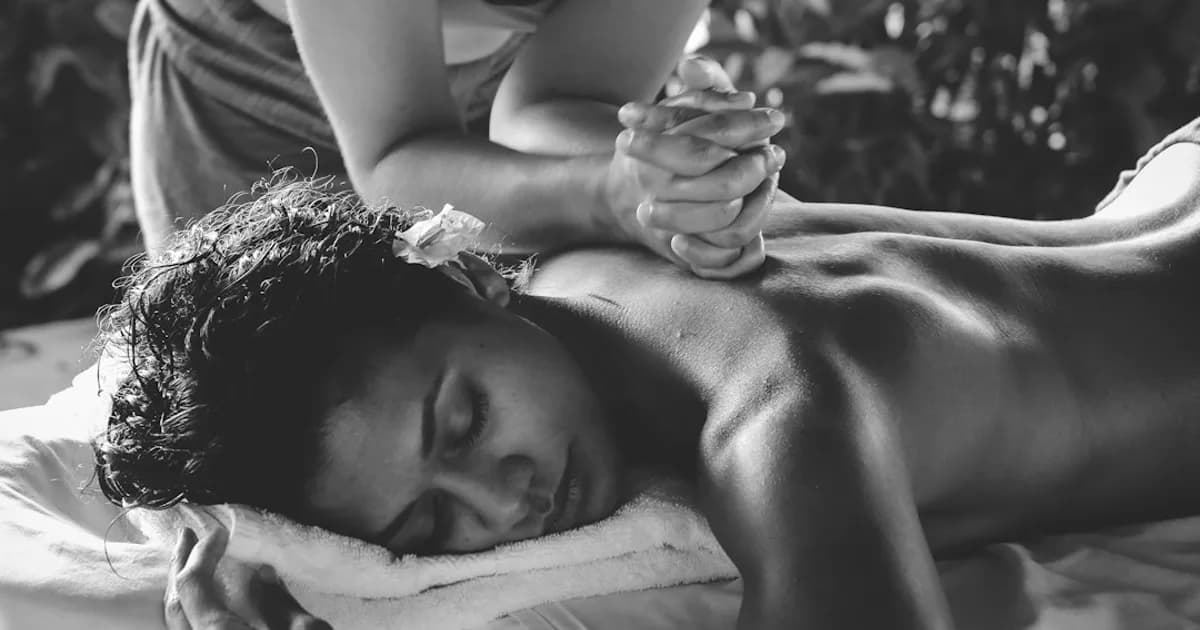
There's a walk to the mailbox that used to be nothing. Then sometime in January it starts taking planning — checking the driveway for glare ice, deciding whether the boots are worth the trouble, waiting for the one afternoon that climbs above ten. If you're past sixty-five in East Bethel, you know the walk we mean. Massage for seniors in East Bethel usually gets filed under "nice to have," a gift-certificate thing. Look at what winter actually does to an aging body up here, though, and it starts to look more like seasonal maintenance. Same category as the snow tires.
Below: what cold does to muscle and movement, what the research on massage and balance in older adults actually found, how to choose a style, and the ten-minute habit at home that matters more than any single session.
Why Minnesota Winters Stiffen Aging Joints
Cold pulls blood away from your arms and legs
When the temperature drops, your body makes a decision on your behalf: protect the core. Blood routes inward. Your arms and legs get less of it. Dr. Sarah Eby of Massachusetts General Hospital puts it plainly in Harvard Health's guide to winter muscle stiffness: the muscles in your legs and arms get less blood flow and less oxygen than they would in warmer weather, so they're stiffer, they don't work as well, and they tire out faster. Cold dulls nerve function too, which nudges injury risk up — and that risk climbs further for anyone already spending more of the day in a chair.
None of that is a character flaw or evidence you're aging badly. It's plumbing. The same body that felt fine in the garden in July is simply running on less circulation to the knees and shoulders come February.
The movement you lose without noticing
The drop-off is steeper than most people guess. Researchers followed community-dwelling adults aged 65 and up in a heavy-snowfall region and found that average daily step counts fell from about 6,500 to about 4,200 once snow arrived — roughly a 35% reduction. Same people, same streets, a third of their daily movement gone with the weather.
That study turned up something else worth sitting with. Muscle strength predicted how active someone was only during winter; in warm months, strength and activity weren't correlated at all. The researchers read it as a sign that winter conditions — frozen footing, heavy clothing, a snowbank at every curb cut — demand more physical capacity just to accomplish ordinary movement.
Anyone who's picked their way down an unplowed stretch in Cedar or Oak Grove knows this already. And the caution becomes its own restriction: unsure footing means fewer trips, fewer trips mean less movement, less movement means more stiffness. Around it goes.
What the Research Says About Massage, Balance and Stability
A six-week trial in older adults
A randomized controlled trial enrolled 35 healthy volunteers averaging about 63 years old. Half received six weekly 60-minute full-body therapeutic massage sessions; the other half formed a relaxation control group. The therapists worked with standard techniques — effleurage, petrissage, friction, some trigger point work — across the neck, shoulders, arms, legs and back.
By week seven, the massage group swayed less. Their displacement area and velocity came in lower across multiple stance conditions, which is the laboratory way of saying they held still better when asked to stand still. That group also showed lower systolic blood pressure at week seven, plus reduced motoneuron pool excitability an hour after treatment — a nervous-system measure suggesting things had genuinely settled rather than just felt settled.
Why stability is the number that matters here
Balance is the working currency of a North Metro winter. It's the difference between a confident walk down the driveway and the tentative half-shuffle that makes you dread going out at all.
Worth being straight about the limits, though. Thirty-five people is a small study, and every participant was a healthy older adult with no chronic conditions affecting balance — not a cross-section of everyone reading this. What the evidence supports is that massage is a reasonable supportive practice for stability and relaxation in older adults. It's not a promise about what happens on your icy sidewalk, and nobody should sell it to you as one.
Massage and Everyday Joint Stiffness
The knee osteoarthritis evidence
The largest relevant trial ran across three states with 222 participants who had knee osteoarthritis. One group got eight weekly 60-minute Swedish massage sessions, one got light touch, one carried on with usual care. Per the National Center for Complementary and Integrative Health, scores for pain, stiffness and physical function all improved after the eight-week massage course.
The honest caveat
Past those eight weeks, the picture flattens out. Massage held onto the improvement but didn't add benefit beyond usual care over the longer follow-up. The participants were also mostly white women, a limit the researchers themselves flagged on how broadly the findings apply.
So the useful read isn't "one session and you're set." It's that a consistent run of sessions, during the stretch when you need it most, is where the benefit tends to show up. For a North Metro senior that maps cleanly onto December through March — the months when the step count collapses and the shoulders creep up toward the ears. Seasonal maintenance, not a one-time repair.
Choosing the Right Style — and Speaking Up About Pressure
Start with Swedish
Cleveland Clinic's overview of massage therapy lays out the common modalities: Swedish is full-body and gentle, aimed at circulation and calming the nervous system; trigger point applies focused pressure to specific knots; myofascial release works the fascia around stubborn neck and back tension; lymphatic massage is gentler still.
For most older adults, Swedish is the sensible place to start. If there's one problem area — a shoulder that's unhappy after shoveling, a hip that resists the stairs — a therapist will often fold in trigger point or myofascial work right there. They mix and match rather than sticking rigidly to a label, so you don't need to walk in knowing the vocabulary. Describe the problem. Let them choose the tool.
Tell them what they need to know
Cleveland Clinic's guidance is that anyone with an existing medical condition should check with their doctor first and tell the therapist about it before the session. That's not a formality. Recent surgery, blood-thinning medication, osteoporosis, skin that bruises easily — every one of those changes how a good therapist works with you.
Pressure is a conversation, not a test of toughness. Deeper work can feel intense in a productive way, sure, but anything that hurts in a bad way should be said out loud, mid-session, without apology. Therapists expect it. Cleveland Clinic also notes that frequent 60-minute sessions tended to produce better outcomes than shorter, less frequent visits — which lines up with both studies above.
What a first visit looks like
If you've never booked one, the unfamiliarity is usually a bigger barrier than the massage. Our massage services at 5D Wellness page walks through session lengths and options, and if you're weighing massage against the other things under our roof, choosing your first wellness therapy near Anoka is a decent starting point. We're in East Bethel — a short drive from Ham Lake, Andover, Cedar, Oak Grove and St. Francis.
Between Sessions: Winter Habits That Hold the Gains
Warm up before you go outside, every time
This is the part that does the heavy lifting, and it costs nothing. Harvard Health recommends 10 to 15 minutes of indoor dynamic movement before you head into the cold — knee lifts, arm circles, gentle squats, trunk twists. Flowing, repetitive motions that push blood and heat into the muscles before you ask anything of them.
Save the held stretches for tissue that's already warm. Twenty to thirty seconds each, no bouncing, daily rather than occasionally. Stretching cold muscle is where people get into trouble.
Keep the step count from collapsing
Given that 35% drop, the goal is just to lose less ground. Short and frequent beats one heroic outing. Indoor laps at the mall, a few passes up the hallway during commercial breaks, a standing stretch every time the kettle goes on. The practical footing stuff matters too: cleared walkways, a hand on the railing, nonskid low-heeled boots instead of whatever's sitting by the door.
Stack it with what you already do
Already using recovery services? Sequencing helps — how massage pairs with cold plunge covers the order question. The general rhythm: heat before a massage opens things up, gentle movement afterward keeps them open.
Frequently Asked Questions
Is massage safe for seniors with arthritis or osteoporosis?
Many older adults use massage comfortably, but it depends on your individual health picture. Cleveland Clinic advises anyone with an existing medical condition to check with their doctor first and tell the massage therapist about it before the session starts. A good therapist will adjust pressure, positioning and which areas they work on. If you have osteoporosis, recent surgery, blood-thinning medication, or skin that bruises easily, say so when you book — that conversation shapes the whole session.
How often should an older adult get a massage for winter stiffness?
The research that showed the clearest changes used weekly sessions. The balance study ran six weekly 60-minute sessions, and the knee osteoarthritis trial ran eight. Cleveland Clinic also notes that frequent 60-minute sessions produced better outcomes than shorter, less frequent visits. For most North Metro seniors, every week or two through the coldest stretch — roughly December through March — is a realistic rhythm. Start there and adjust based on how you feel.
What kind of massage is best for stiff joints and limited range of motion?
Swedish massage is the usual starting point for older adults: full-body, gentle, and focused on relaxation and circulation rather than deep pressure. If one specific area is the problem — a tight shoulder from shoveling, a stiff hip — a therapist may add trigger point work or myofascial release to that spot. Most therapists blend techniques rather than sticking rigidly to one style, so describe the problem and let them build the session around it.
Should I be doing anything at home between massage sessions?
Yes, and it matters more than the massage itself. Harvard Health recommends 10 to 15 minutes of indoor dynamic warm-up — knee lifts, arm circles, gentle trunk twists — before you head outside in cold weather, and saving held stretches for tissue that is already warm. Twenty to thirty seconds per stretch, no bouncing. Doing this daily through winter keeps the gains from a session from fading between visits.
The Bottom Line
Winter in the North Metro quietly shrinks how much older adults move, and less movement feeds more stiffness. That's the loop worth interrupting. Massage looks like a reasonable supportive piece of it: one small trial found improved postural stability after six weekly sessions, a larger one better pain, stiffness and function scores after eight. Both point the same direction — consistency through the season beats a single visit.
Pair that with ten minutes of warm-up before you head out the door and you've got something that holds. If you'd like to try it, you can book a session with us here in East Bethel.
This article is for general wellness and educational purposes only and is not medical advice. 5D Wellness services are not a substitute for professional medical care. Results vary by individual. Consult a qualified healthcare provider before starting any new wellness practice, especially if you are pregnant or have a medical condition.