
Red Light Therapy
Red Light Therapy Near Lino Lakes: A Quick Guide
5D Wellness Team·11 min read·October 9, 2026
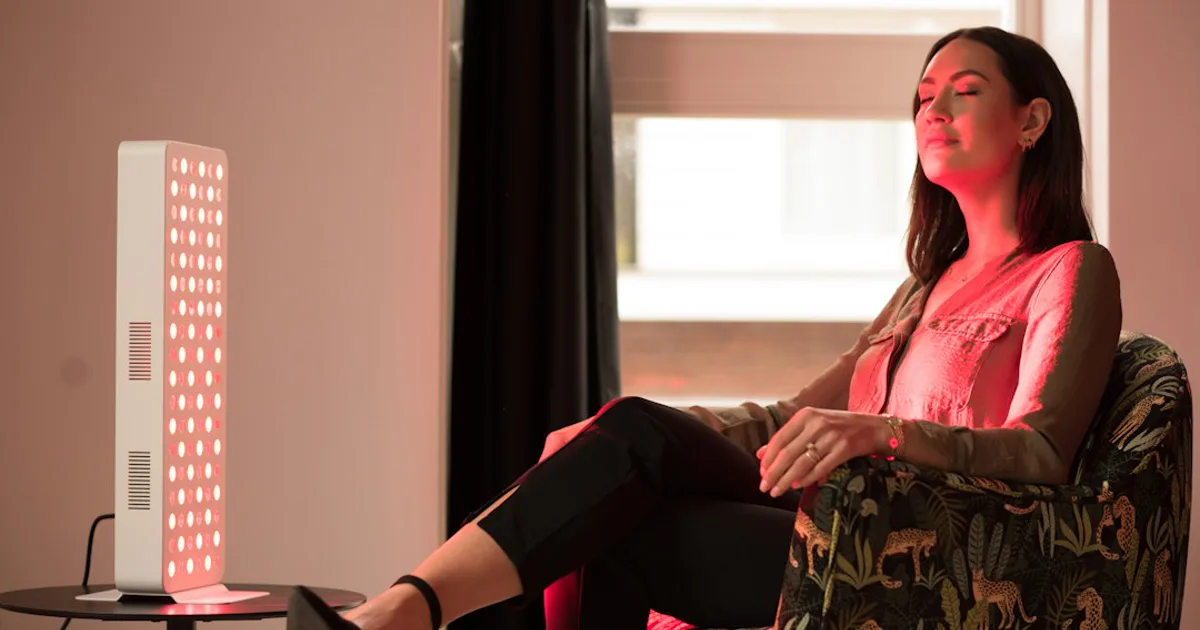
Every October, about the time the furnace kicks on for the first time, the questions start. Someone in Lino Lakes sees a wall of red panels on their feed, or a neighbor brings it up at the rink, and suddenly everyone wants to know whether the glowing thing is real or just good marketing. If you've been looking into red light therapy near Lino Lakes, you've got plenty of company — it's one of the most asked-about services in any North Metro wellness studio right now.
It's also easy to oversell. So here's the practical version: what it is, what a session looks like, how often you'd realistically need to go, the safety basics, and where to try it without driving into the city.
What Red Light Therapy Is (and What It Isn't)
You'll see it called a few different things. Cleveland Clinic lists photobiomodulation, low-level laser therapy, and cold laser therapy as names for roughly the same idea — exposing skin to low-level red light. The panels in studios sit in a fairly specific range. Research reviews describe red to near-infrared light between about 600 and 1100 nanometers, with most devices landing in either the 630-670 nm red band or the 808-940 nm near-infrared band.
What it isn't is a tanning bed. No ultraviolet light, no tan, and the sunburn math doesn't apply. It isn't medicine either. Nobody at a wellness studio is diagnosing anything, and red light is no substitute for whatever your doctor has you doing.
What's happening at the cellular level
The mechanism researchers describe is specific. Light in that range gets absorbed by an enzyme in your mitochondria called cytochrome c oxidase, which bumps up ATP production, frees a little bound nitric oxide that improves local blood flow, and nudges the signaling your cells use to manage inflammation. Harvard Health puts it more simply: the light is thought to stimulate mitochondria to lower inflammation and support collagen production.
Where the research honestly stands
The evidence is early. Cleveland Clinic notes that most published studies have small participant numbers, often lack placebo controls, and were sometimes done on animals rather than people. A systematic review of 57 papers on red and near-infrared light for skin rejuvenation found the same pattern — mostly single-center studies and case series, with enough variation in light parameters that the authors couldn't pool the numbers. Nobody has settled on an ideal dose for any specific concern yet. That doesn't make red light useless. It means anyone promising you a particular outcome is ahead of the science.
Why Lino Lakes Residents Ask About Red Light in the First Place
The timing of those questions isn't random. Two local realities drive almost all of them.
Five months of dry indoor air
Minnesota winter means the better part of half a year with forced-air heat running and very little daylight coming through the windows. Skin notices. Red light enters the conversation because of the collagen connection — Harvard Health, citing the American Academy of Dermatology, lists softer fine lines, smoother texture, lightened dark spots, and less visible redness among reported results. Those are research findings, not a promise about your face. But they explain why interest spikes in November and not in July.
Hockey, nordic trails, and driveway snow
The rest of the local interest is recovery. Between youth hockey schedules, the Rice Creek trail system, and shoveling the driveway three times in one week, plenty of people around Lino Lakes and Centerville are sore for ordinary reasons. Research reviews list exercise recovery and muscle-damage reduction among the areas under study, and laboratory work using 635 nm red light at 4 joules per square centimeter raised myogenic markers and mitochondrial biogenesis in muscle cells. Keep the framing straight, though. That study ran in cell culture, and the authors noted that light behaves very differently once it travels through real tissue. It's a reason to be curious, not a result to expect from your hamstrings.
If your soreness comes from sitting rather than skating, our guide to recovery tools for a desk-bound day in Lino Lakes covers the rest of the toolkit.
Setting expectations before you go
One useful detail from the reviews: benefits show up most clearly in tissue that's under some kind of metabolic stress. If you're already sleeping well, training sensibly, and recovering fine, the difference may be modest. People who are run down tend to notice more.
What a Red Light Session Actually Looks Like
Less than you'd think. You change down to whatever skin you want exposed, because light doesn't travel through a hoodie. Eye protection goes on. You sit or stand at the distance the panel calls for and wait out a timer — published protocols put session length between 1 and 30 minutes depending on the device and your distance from it. Then you get dressed and go on with your day. No downtime, nothing to schedule around.
Why you shouldn't try to maximize it
This is the part people get wrong. Photobiomodulation has what researchers call a biphasic dose response, and both sides of that window are real. Too little light does nothing measurable. Too much doesn't do more. Standing closer for longer isn't a shortcut — the distance and the timer are the protocol. If a studio gives you a number, use their number.
What about the masks and wands?
At-home devices are tempting and sometimes fine. The catch Harvard Health points to is output: in-office panels allow real dose control and calibration, while consumer masks, caps, and wands vary widely in light strength, which makes it genuinely hard to know what dose you're getting. If you're trying red light for the first time, a calibrated panel tells you more. Our companion piece on what to know before your first red light visit walks through the rest.
How Often to Go, and When You'd Notice Anything
Frequency matters more than anything else here. Research protocols generally run 2 to 5 sessions a week across roughly 4 to 7 weeks. Cleveland Clinic frames it as one to three times a week for weeks or even months. Harvard's dermatology framing is the bluntest of the three — multiple times a week for four to six months, slow and steady rather than a quick fix.
Do the Lino Lakes math on that. A 20-minute drive twice a week for two months is membership behavior, not drop-in behavior. That's less a sales pitch than an honest read of what the research describes. If you're going to try red light, try it on a schedule, or don't bother forming an opinion about it.
Week one will feel like nothing. If anything shifts, texture and redness are usually where people notice first, over a span of weeks. Nobody walks out of session one looking different.
Safety, Eye Protection, and Who Should Ask First
The safety picture so far is reassuring, though not unlimited. Across the seven skin-rejuvenation studies in that systematic review, the only side effect reported was mild temporary redness in four patients, with no oncologic complications. Broader reviews likewise report no device-related adverse events in most trials. The honest caveat: long-term data is still thin, because these panels haven't been in wide consumer use for long.
A few practical rules:
- Wear the eye protection you're handed. Every time.
- Follow the distance and duration the studio gives you instead of improvising.
- Talk to your own healthcare provider first if you have a light-sensitive condition such as lupus, take a medication that increases light sensitivity, or are pregnant.
- If you have a deeper skin tone, Harvard Health notes it's worth starting with lower doses, since visible light sensitivity varies and hyperpigmentation is possible.
Most of the real risk sits in misuse — going too often, ignoring the recommended distance, skipping the goggles. Used as directed, it's about as low-drama as wellness services get.
Where to Try Red Light Therapy Near Lino Lakes
There's no red light panel sitting in downtown Lino Lakes, which is usually where the search stalls. For most people the nearest option is north: red light therapy at 5D Wellness in East Bethel, about 20 to 25 minutes up Highway 65 through Ham Lake, or across on Lake Drive depending on which side of town you start from. Centerville, Circle Pines, Blaine, and Ham Lake residents are all looking at a similar drive — and much simpler parking than anything in Minneapolis.
The practical advantage of a multi-service studio is stacking. A red light session is short and passive, so it fits before or after a sauna round or a plunge without really lengthening the visit — which makes the drive pencil out better. If you haven't tried the heat side yet, our infrared sauna beginner's guide is a good place to start.
Wherever you end up, four questions are worth asking: panel wavelength, recommended distance, session length, and whether eye protection is provided.
Frequently Asked Questions
How far is red light therapy from Lino Lakes?
5D Wellness is in East Bethel, roughly a 20-to-25-minute drive north of Lino Lakes depending on whether you take Highway 65 up through Ham Lake or cut across on Lake Drive. For most Lino Lakes, Centerville and Circle Pines residents that's a shorter trip than heading into Minneapolis, with much simpler parking.
How often should you do red light therapy?
Published protocols generally land between two and five sessions a week over four to seven weeks, and Cleveland Clinic describes a similar one-to-three-times-weekly rhythm. Frequency matters more than intensity, which is why memberships tend to suit red light better than one-off visits.
What does red light therapy feel like?
Warm and uneventful. There's no ultraviolet light involved, nothing touches your skin, and you're not getting a tan. You sit or stand at the recommended distance with eye protection on and wait out a timer. Most people call it the most boring part of their visit.
Can you do red light therapy and cold plunge in the same visit?
Yes, and plenty of North Metro regulars do. A red light session is short and passive, so it slots before or after a sauna round or a plunge without adding much time. There's no single research-backed order, so most people settle on a sequence by preference.
Is red light therapy safe?
In the research so far, reported side effects have been minimal and short-lived, with mild temporary redness the main finding across skin-rejuvenation studies. Still, wear the eye protection you're given, and check with your own healthcare provider first if you have a light-sensitive condition such as lupus, take a photosensitizing medication, or are pregnant.
The Bottom Line
Red light is the least dramatic thing in a recovery studio, and that's exactly its appeal. Short sessions, nothing to recover from, no commitment past showing up — which makes it easy to try and decide about for yourself. Just hold your expectations where the research holds them: consistency over intensity, wellness rather than medicine, and an evidence base still filling in around the edges.
If you're in Lino Lakes and curious, the drive is shorter than the Minneapolis trip you're probably picturing. Book a session and find out what you think.
This article is for general wellness and educational purposes only and is not medical advice. 5D Wellness services are not a substitute for professional medical care. Results vary by individual. Consult a qualified healthcare provider before starting any new wellness practice, especially if you are pregnant or have a medical condition.