
Red Light Therapy
Red Light Therapy in Blaine: What to Know Before You Go
5D Wellness Team·11 min read·October 6, 2026
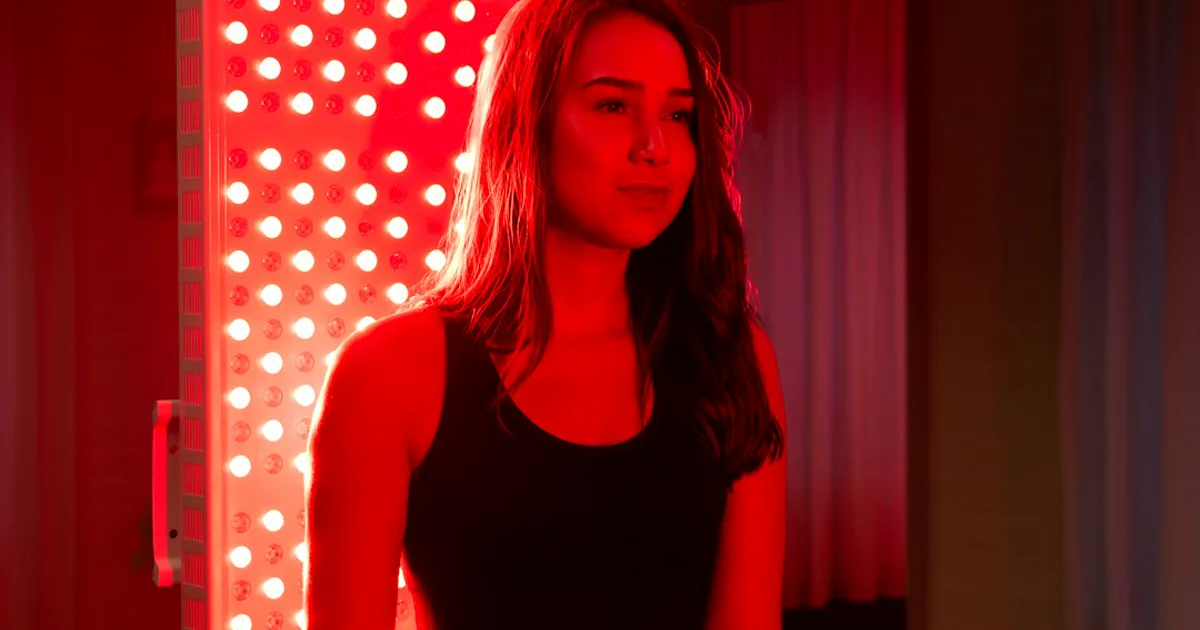
Maybe you drove past the glow through a window on a dark afternoon. Maybe someone at the rink in Blaine brought it up between periods, or it turned up on a wellness menu next to the sauna and you nodded like you knew what it was. Red light therapy is one of those things everybody has heard of and almost nobody can describe.
So here's the unhyped version, for anyone around Blaine thinking about a first session. What the light is actually doing. What the room looks like, how long you'll be in there, what the research supports and where it quietly stops, who should check with a provider before coming in, and how the whole thing fits into a North Metro winter. Ten minutes of reading and you'll walk in knowing more than most people in the room.
What Red Light Therapy Actually Is — And What It Isn't
The mechanism, in plain language
The clinical name is photobiomodulation. You'll also see low-level light therapy and cold laser therapy, which are the same idea wearing different hats. Red and near-infrared light lands on your skin and gets absorbed by your mitochondria — the little engines inside your cells — specifically by an enzyme called cytochrome c oxidase. That absorption bumps up cellular energy production and shifts cells toward less inflammation and more collagen, the structural protein that keeps skin firm.
The useful light sits in a 600 to 1100 nanometer window. Visible red runs roughly 625 to 670 nm, near-infrared roughly 808 to 905 nm, and wavelength is what decides how deep the light reaches. Red stays shallower and does its work in skin. Near-infrared travels further into the tissue underneath.
Four things it is not
It is not ultraviolet light. That's the big one. A tanning bed and a red light panel occupy completely different neighborhoods of the spectrum, and red light therapy carries none of the UV cancer risk. You will not tan, and you cannot burn.
It is not a heat treatment. That's the sauna, and it's a different room.
It is not one of those bright white light boxes people in Minnesota pull out in January. Different light, different purpose — and the two get mixed up constantly.
And it is not medicine. Red light therapy is a supportive wellness practice, not a replacement for care from your own provider.
What a Session Actually Looks Like
Before you walk in
Show up with clean, bare skin wherever you want the light to land. Lotion, heavy makeup and sunscreen all sit between you and the panel, so skip them that morning. Wear something that leaves the target area uncovered — most people keep it simple. Drink water like you would before any recovery session.
In the room
It's quieter than you expect. A panel or a bed, a deep red glow, and that's about it. No tunnel, no fan noise, nothing that feels clinical. Staff set your distance from the panel — anywhere from a few inches to a couple of feet, depending on the device — and hand you eyewear before anything switches on. Eyes stay closed or protected, and you don't look into the LEDs.
Most sessions run 10 to 20 minutes, which surprises people who assumed they were signing up for an hour. The short end has real support behind it: in one study on skin barrier recovery, 10 minutes of red light produced results comparable to a full hour of exposure. More time doesn't keep buying more benefit.
As for how it feels — a gentle warmth, if that. Researchers measuring the skin surface during red light exposure recorded a temperature change of less than one degree Celsius. Mostly you sit in a warm red room and get ten quiet minutes to yourself, which in a Minnesota February is not nothing. You can see the setup on our red light therapy page before you come in.
Afterward
No downtime at all. Drive home, head to work, go to practice. The main side effect anyone reports is occasional mild redness that fades on its own.
What the Research Actually Supports — And Where It Stops
Skin
Dermatology research points to fine lines, skin texture, redness, dark spots, scarring and acne as the areas with the most supportive evidence. The mechanism is the collagen-and-inflammation story from earlier, not anything mystical. Photobiomodulation also carries strong clinical evidence in specific medical settings like radiation dermatitis and chronic wound care, which tells you it's taken seriously by people who have a lot to lose. That's research context, though — not a service we offer.
Recovery and training
Here's the detail most people get backwards. In the skeletal muscle literature, the evidence supports applying light before hard effort rather than after — that's where the performance and tissue-protection findings cluster. So if you lift at a gym in Blaine or run the Rice Creek trails, the practical move is booking your panel time ahead of the workout instead of as a reward afterward. Studies used wavelengths including 655 nm red and 830 nm infrared, and combining light sources outperformed either one alone in at least one trial.
That same before-the-effort logic is why it's caught on with hockey families around the North Metro, where the season asks plenty of both the kids and the parents hauling them to 6 a.m. ice.
Where the evidence stops
We'd rather tell you this part than have you find it out annoyed.
- The benefit shows up largest in tissue that's already stressed and smaller in healthy, well-trained tissue. Reviewers call it a ceiling effect.
- There's no standardized dosing guideline yet. Wavelength, intensity and session length vary widely across studies, and plenty of that research is small, uncontrolled, or done in cells and animals rather than people.
- There is no evidence supporting red light for weight loss, cellulite, or mental health conditions. Anyone selling it that way is out ahead of the science.
- A professional panel gives far better dose control than an at-home mask or wand, where output varies so much between products that you genuinely can't tell what exposure you're getting.
Who Should Talk to a Provider Before Booking
Short list, worth reading.
If you have a light-sensitive condition — lupus is the usual example — or you take a medication that increases light sensitivity, talk to your provider first. Dermatologists also advise that people with darker skin start at lower doses, since visible-light sensitivity can sometimes lead to dark spots. And if you're pregnant or managing any active medical condition, ask the person who knows your history.
Some context on the safety picture: a systematic review of 57 papers on photobiomodulation for skin rejuvenation found only mild, transient redness across seven clinical trials and no clinical data tying it to serious adverse events. Reassuring, yes. Long-term data is still thin, and we'd rather say so than pretend otherwise.
Our front desk will ask about medications and conditions when you check in. If something comes up, we'd honestly rather you go check with your doctor and come back next week.
Working It Into a Minnesota Winter
The seasonal case
From October through April the North Metro loses daylight at a pace that wears on people. Between hockey season, shoveling, pond skating and treadmill miles in a cold garage, bodies around here get asked for a lot from November to March. Ten quiet minutes under a warm panel on a Tuesday in January makes a reasonable anchor for a winter routine — not a fix for anything, just a small standing appointment with yourself that happens to have a plausible mechanism behind it.
Stacking and cadence
A simple weekly shape that works for a lot of our members: red light before a lift or a skate, then pair it with an infrared sauna session afterward for the heat, and a cold plunge at the end if that's your thing. On frequency, clinical protocols typically run two to five sessions a week over four to seven weeks — so once or twice weekly through the winter is a sane, sustainable version of that.
If you work from home and the dark months are the real problem, we wrote separately about how remote workers use it through a dark East Bethel winter.
Logistics: 5D Wellness is straight up Highway 65 in East Bethel, about twenty minutes from Blaine, and there's membership access if you'd rather not think about booking every time.
Frequently Asked Questions
How long is a red light therapy session?
Most sessions run about 10 to 20 minutes. That's shorter than people expect, and it's grounded in the research — one study on skin barrier recovery found 10 minutes of red light produced results comparable to a full hour of exposure. Longer isn't better here; the dose plateaus. You'll be in and out faster than a sauna round.
Does red light therapy hurt, or feel hot like a tanning bed?
Neither. It isn't ultraviolet light, so it doesn't tan or burn, and it generates almost no heat — researchers measuring surface temperature during red light exposure recorded a change of less than one degree Celsius. Most people describe it as sitting in a warm red glow. If you want heat, that's what the sauna is for.
How many sessions before I notice anything?
Think in weeks, not days. Clinical protocols typically run two to five sessions a week for four to seven weeks, and Cleveland Clinic describes a cadence of one to three times weekly over weeks or months. Harvard's dermatology guidance is blunter: consistent use multiple times a week over four to six months. It's slow and steady, not a quick fix, and results vary from person to person.
Do I need eye protection?
Follow whatever the device directions say and keep the light out of your eyes — don't stare into the panel. At 5D Wellness our staff walks you through positioning and hands you protective eyewear before your first session, so you don't have to guess.
Is red light therapy safe if I've had skin cancer or I'm on medication?
That's a conversation for your own healthcare provider, not a blog post. For context, a systematic review of 57 papers concluded that current evidence suggests photobiomodulation is oncologically safe for skin rejuvenation. Separately, dermatologists advise caution with light-sensitive conditions like lupus and with photosensitizing medications. Bring it up with your provider before you book.
The Bottom Line
Red light therapy is low-drama: short sessions, no UV, no heat, no downtime, and a mechanism that holds up. What it asks for is consistency over weeks rather than one dramatic visit, and a professional panel will give you better dose control than anything you order online. Go in with realistic expectations and it's an easy thing to like.
If anything on the caution list above applies to you, check with your provider first. Otherwise it's a twenty-minute drive from Blaine up Highway 65 — book your first session and see what ten quiet minutes does for your week.
This article is for general wellness and educational purposes only and is not medical advice. 5D Wellness services are not a substitute for professional medical care. Results vary by individual. Consult a qualified healthcare provider before starting any new wellness practice, especially if you are pregnant or have a medical condition.