
Massage & Bodywork
Massage for New Moms: Easing Into Postpartum Wellness in Andover
5D Wellness Team·10 min read·September 20, 2026
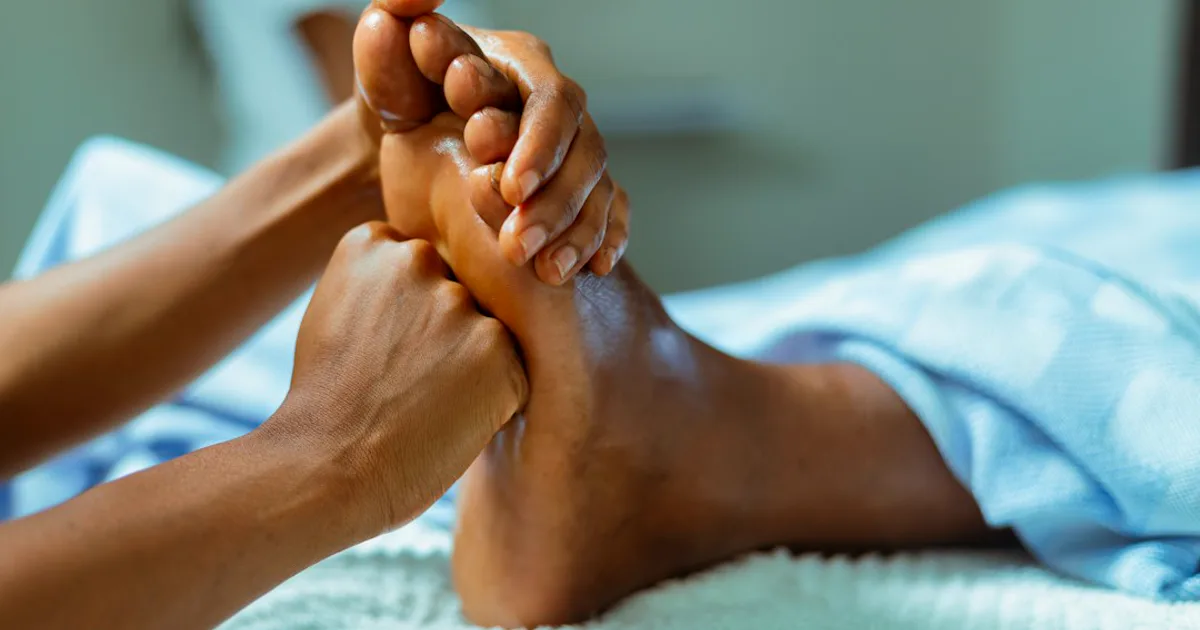
It's somewhere in month two. Your shoulders have locked into the shape of a feeding position you didn't choose. Your low back has opinions every time you lift the car seat. You've slept in ninety-minute increments since sometime in the summer, and this afternoon — for the first time in weeks — somebody else has the baby for an hour.
If you're a new parent in Andover, Ham Lake, Blaine, Coon Rapids or Anoka, you've probably been told to rest. Nobody explains what that means with a newborn in the house. Massage for new moms in Andover and the surrounding North Metro towns is one bookable version of that advice — an hour where nobody needs anything from you and someone competent works on the parts of you that have been carrying everything.
Here's what's happening in your body, how a postpartum session differs from a standard spa massage, what researchers have measured, when it's safe to start, and what the first appointment looks like.
Why Everything Aches in Those First Weeks
The load your body is carrying
Look at the mechanics of an ordinary day. Feeding happens hunched and static, forty minutes at a stretch, eight or more times around the clock. Everything else happens one-armed. Car seats get hauled at an angle no ergonomist would sign off on. Half your life relocates to the floor.
It all concentrates in the same places: the neck, the upper back between the shoulder blades, the hips. And the low back is loud for most people — published estimates put postpartum low back pain somewhere between 15% and 70% of women, with 5% to 40% still reporting symptoms past the six-month mark. You're not imagining it, and you're not the outlier you feel like at 3 a.m.
Recovery is longer than the six-week appointment implies
The six-week checkup does a lot of psychological damage, honestly. It reads like a finish line. Clinicians actually describe postpartum recovery in three stages — acute in the first six to twelve hours, subacute from about twenty-four hours out to six weeks, and delayed from six weeks all the way to six months. That last stretch is about the gradual restoration of muscle and connective tissue, and the changes routinely last well beyond eight weeks.
The delayed phase is where bodywork fits naturally. If your baby arrived in late fall, it also overlaps the months when nobody in Minnesota goes outside anyway, and a short drive to a warm, quiet room may be the whole realistic outing. Same logic behind massage for seniors staying mobile through a Minnesota winter: match the support to the season and the stage of life you're in.
How Postpartum Massage Differs From a Regular Relaxation Massage
Positioning is the biggest change
Face-down is often a non-starter — tender or engorged breasts make the standard prone position uncomfortable at best. A therapist who works with postpartum clients will set you up side-lying with bolsters between your knees and under your top arm, or semi-reclined with pillows supporting your chest and back. Getting situated takes a few extra minutes. It's worth it.
Sessions are also built to be interrupted. You may need to sit up, feed, pump, or change position because something stopped being comfortable. That's expected, not a disruption of the plan.
Pressure and focus are different too
Most of the work lands on the upper back, neck, shoulders, hips and glutes — the regions absorbing that load. Aggressive deep-tissue work isn't the goal in early recovery; moderate, sustained pressure serves better. Abdominal work, if it happens at all, stays gentle and only with clearance from your provider, especially after a cesarean.
What to tell your therapist
Come prepared to share the type of birth you had, how many weeks out you are, whether you're nursing, any incision or stitches still in the picture, and any area that's off-limits. A good therapist asks most of this before you're ever on the table — it's how the massage services at 5D Wellness get tailored to where you actually are.
What the Research Actually Shows
Relaxation and the stress response
Researchers gave 100 first-time mothers either a twenty-minute slow-stroke back massage on their first postpartum day or quiet rest in a calm room. The massage group's anxiety scores came out significantly lower — and the gap was still there the next morning. The authors credited massage's influence on the autonomic nervous system and the drop in cortisol, adrenaline and noradrenaline that follows.
Mood and bonding
A 2025 randomized trial looked at the other direction of touch: mothers trained in infant massage. At both six and ten weeks postpartum, those mothers scored higher on maternal attachment measures and lower on the Edinburgh postnatal depression screening scale than mothers receiving standard care. Worth sitting with: the ritual of unhurried touch seems to matter whether you're receiving it or giving it.
Physical comfort
In a study of 70 first-time mothers working through abdominal recovery, adding hands-on manual massage to a standard rehabilitation program produced greater reductions in low back pain scores than the standard program on its own.
The honest caveats: small samples, varied protocols, clinical settings. These are encouraging signals about comfort and relaxation, not promises about how any particular body will respond.
When It's Safe to Start
Ask first, book second
Get clearance from your OB, midwife or primary care provider before your first session, and mention any complications from the birth. This isn't a formality — it's what lets your therapist work confidently instead of cautiously.
Timelines differ by birth. After an uncomplicated vaginal birth, many people feel ready for gentle full-body work within the first few weeks. Cesarean recovery runs longer: surface incision healing takes roughly ten days, while deeper tissue repair can continue for up to twelve weeks — which is why work near the incision gets deferred until a provider says otherwise.
Reasons to call your provider instead
Heavy or returning bleeding. Fever. Calf pain or swelling. A hot, painful area on the breast. An incision that's red or draining. A blood-pressure concern flagged at a checkup. Those are provider conversations, not massage-table conversations — make the call.
Starting gently
A shorter first session is a perfectly reasonable choice, and so is rescheduling when the day goes sideways. Most studios would rather move your appointment than have you white-knuckle through it.
Massage for New Moms in Andover: Your First Session
The logistics that decide whether you actually go
East Bethel is a short drive from Andover, Ham Lake, Coon Rapids, Blaine and Anoka — close enough that the trip isn't the obstacle. Coverage usually is. Pick a slot a partner, a parent or a friend can realistically cover, and give yourself a few extra minutes so you're not walking in mid-stress. Feed or pump right beforehand if the timing allows, bring a pump if it doesn't, and wear something easy to get in and out of.
In the room
You'll talk through the intake first, then get positioned and bolstered, then agree on pressure. You have standing permission to say stop, ease up, or change position at any point — no explanation required.
What the hour tends to feel like: a warm room, quiet, and nobody needing anything from you. For a lot of new parents that last part is doing as much work as the massage itself.
Afterward
Drink water. Expect to feel loose and possibly sleepy, and try not to schedule anything demanding right after. Some people pair the session with time in another warm, quiet space; plenty of others go straight home and nap while someone else takes the baby. Both count. When you're ready, you can book a session and see how it lands.
Frequently Asked Questions
How soon after giving birth can I get a massage?
Many people feel ready for gentle full-body work within the first few weeks after an uncomplicated vaginal birth, while cesarean recovery usually calls for a longer wait — surface healing takes roughly ten days, but deeper tissue repair can continue for up to twelve weeks. It depends on your birth and your recovery, so ask your OB or midwife for clearance before you book. Once you have it, tell your therapist what kind of birth you had and how far along you are.
Is postpartum massage safe while I'm breastfeeding?
Yes, and it's one of the reasons many new parents look for non-drug comfort options in the first place. Nursing does mean a few adjustments: tender or engorged breasts make lying face-down uncomfortable, so a good therapist will position you side-lying or semi-reclined with extra bolstering. Feed or pump right before your appointment if you can — it makes the whole hour easier.
Can I bring my baby to a postpartum massage appointment?
Policies vary by studio, so call ahead rather than assume. Practically speaking, a session is much more restorative when someone else is holding the baby — that hour of not being needed is a real part of the benefit. If childcare is the obstacle, ask about the earliest and latest slots, which are often easiest to cover with a partner's schedule.
What kind of massage is best for postpartum recovery?
Most new parents do well with a moderate-pressure full-body session focused on the neck, shoulders, upper back and hips — the areas taking the load from feeding positions and carrying an infant. Deep, intense work isn't the goal in early recovery. Tell your therapist where you're sore and what you're comfortable with, and let them build the session around that.
How often should a new mom get a massage?
There's no universal schedule. Some people come once as a reset; others settle into a session every two to four weeks through the first six months. A reasonable starting point is one appointment, then see how your body and your calendar respond before committing to a rhythm.
The Bottom Line
Postpartum recovery runs months, not weeks. An hour of skilled, unhurried touch is a legitimate way to support it — not an indulgence you have to earn by getting through some arbitrary amount of hardship first.
The low-stakes version of starting: get your provider's clearance, book one session, see how it lands. If you find yourself thinking two seasons ahead — and North Metro parents usually are — our guide to sports massage for youth hockey players will be waiting. For now, East Bethel is a short drive, and the hour is yours.
This article is for general wellness and educational purposes only and is not medical advice. 5D Wellness services are not a substitute for professional medical care. Results vary by individual. Consult a qualified healthcare provider before starting any new wellness practice, especially if you are pregnant or have a medical condition.