
Infrared Sauna
Infrared Sauna Near Ham Lake: A Beginner's Guide
5D Wellness Team·10 min read·October 6, 2026
There's a particular kind of January afternoon in Ham Lake where the cold stops being weather and becomes something you carry around in your shoulders. You scrape the windshield. You haul in groceries. You finally sit down, and the stiffness is still right there at nine o'clock. Somewhere in that stretch of winter, a neighbor or a coworker mentions they've been going to an infrared sauna, and it sounds appealing — right up until you realize you have no idea what's actually involved.
That's the gap this guide is for. If you've been looking into an infrared sauna near Ham Lake, MN and want to know what the room is like before you walk into it, here's the honest version: what the thing is, what your first twenty minutes feel like, what the research supports and what it doesn't, and the practical details nobody thinks to tell a first-timer.
What an Infrared Sauna Actually Is (and Isn't)
It warms you, not the room
The mental image most Minnesotans have of a sauna comes from a lake cabin — cedar walls, a stove, a bucket of water, and air hot enough that you end up breathing through your mouth. An infrared sauna works on a different principle. Rather than heating the air around you, infrared lamps direct warmth onto your skin, so the heat gets to you without the room itself having to become an oven.
The physics behind that is more specific than it sounds. Far infrared occupies a band of roughly 3 to 100 micrometers on the electromagnetic spectrum, and researchers note it can reach up to about 1.5 inches beneath the skin. That depth is why people describe the sensation as warmth coming from the inside out instead of pressing in from the outside — a line that sounds like marketing copy until you've sat in one.
The temperature difference surprises people
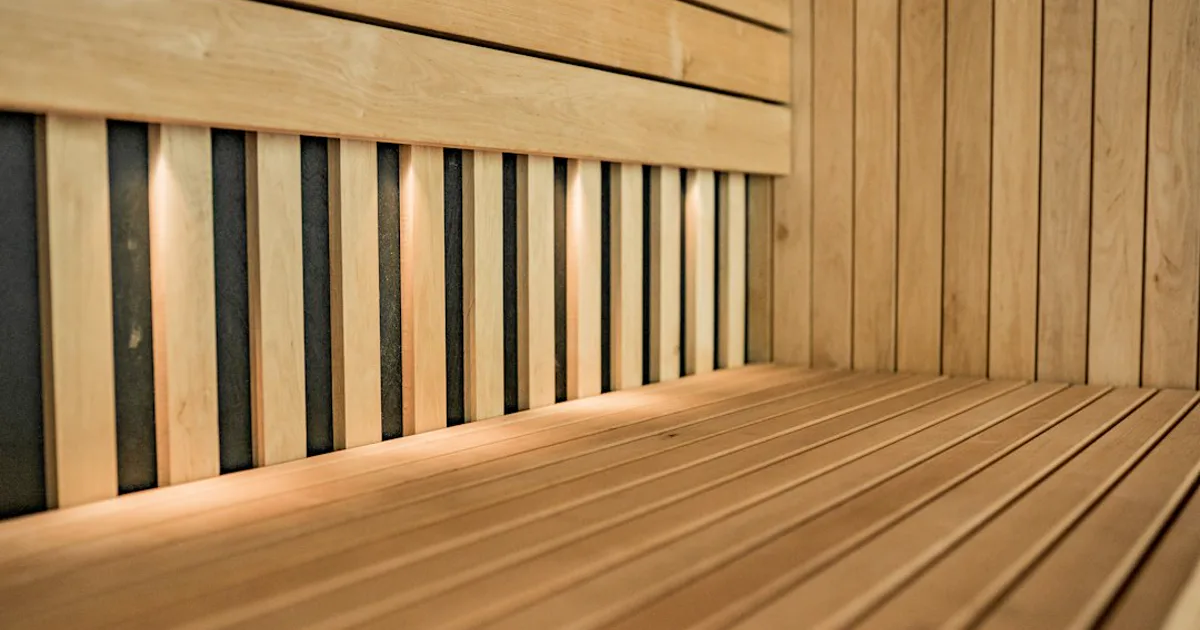
Here's the number that reframes everything for first-timers: an infrared cabin typically runs between 110 and 135 degrees Fahrenheit, while a traditional sauna sits at 150 to 195. You are not walking into a blistering room. You're walking into a warm, dry, quiet one where you can hold a conversation, read the wall, or just sit there. The infrared sauna suite at 5D Wellness in East Bethel is set up for exactly that — low light, a bench, a towel, and nothing you have to operate.
Your First Session, Start to Finish
Before you step in
Arrive having had water, and skip the heavy meal beforehand. A sandwich two hours earlier is fine; the Friday fish fry twenty minutes earlier is not. Bring a water bottle in with you. When you open the door, you'll find a bench, a towel, dim light, and a small control panel. That's the whole setup.
The first five minutes
Not much happens, and that throws people. The heat builds gradually instead of hitting you at the door, and you probably won't sweat at all for the first several minutes. Normal. It isn't a sign the thing is broken or set too low. Most people spend this window realizing they've left their phone outside and don't quite know what to do with their hands. That's not a rule the studio imposes — it's just what the room is for.
Minutes five through twenty
Then the sweat arrives, properly, and your heart rate drifts upward. Clinicians describe this physiological response as resembling moderate exercise — a rising heart rate and increased circulation, which explains both why the session can feel productive and why you shouldn't white-knuckle it. Too hot feels like lightheadedness, a racing pulse, or a sudden strong preference for being somewhere else. Stepping out at twelve minutes on your first visit is an ordinary outcome, not a failure. Nobody is keeping score, and the small courtesies of a shared space are easy to pick up — our notes on sauna etiquette for first-timers cover the rest.
Cooling down
Rinse off afterward, keep drinking, and give yourself ten unhurried minutes before you get in the car and head back down Highway 65. People who rush straight from the cabin to the driver's seat tend to feel wobbly, and that usually has less to do with the sauna than with standing up too fast and leaving without water.
What the Research Supports — and What It Doesn't
Where the evidence looks encouraging
Sauna bathing has a reasonable body of literature behind it. A systematic review covering 40 clinical studies and 3,855 participants found favorable associations across cardiovascular markers, rheumatological conditions, chronic pain, and airway complaints. The infrared protocols in that literature typically ran 45 to 60 degrees Celsius for 15 to 30 minutes — close to what a session at a studio actually looks like.
There's also the softer stuff that regulars talk about first. Cleveland Clinic physicians point to improvements in anxiety and sleep, and note that sauna heat is associated with the release of brain-derived neurotrophic factor along with more blood flow to muscles. That combination explains the crowd you'll see on a weeknight in February: gym-goers chasing recovery, and people who spent the afternoon behind a snow shovel.
Where it's thinner than the marketing suggests
Being straight about this matters more than selling it. A review focused specifically on far-infrared saunas characterized the cardiovascular evidence as limited and moderate, with small sample sizes, short study durations, and much of the work coming from a single research group. That same review found the evidence actually argued against the popular claim that sauna use lowers cholesterol.
So the useful framing is a supportive one. An infrared sauna is a wellness practice — a warm, quiet, consistent twenty minutes that a lot of people find makes their week better. It isn't medicine, and anyone promising you a specific medical outcome is getting ahead of what the science says.
How Hot, How Long, How Often When You're New
Start lower than your instincts suggest. Cleveland Clinic's guidance for beginners is to begin around 110 degrees for five to ten minutes and build from there once you know how your body responds. In an infrared room, 110 is genuinely warm — the heat just arrives differently than you're braced for.
From there, work toward the 15-to-20-minute range and keep sessions under 30 minutes. General guidance lands around three to four sessions a week as a sensible ceiling. For the longer version of that math, we've written separately about how long a session should really last.
One local pattern: a lot of North Metro regulars go twice a week from November through March, then taper off once the lakes open and they're outside anyway. A seasonal rhythm tends to hold up better here than a year-round commitment, and two sessions you reliably keep beat four you abandon by the second cold snap.
What to Wear, What to Bring, and Who Should Ask First
Wear a swimsuit or loose cotton — nothing synthetic and clingy. Skip lotions, oils, and heavy makeup; you're going to sweat through all of it. Bring water or an electrolyte drink, a hair tie if you need one, and more towel than you think. Hydration before and after is treated as non-negotiable in clinical guidance, and it's the single thing first-timers most often get wrong. Our guide to hydrating around a session goes into specifics.
A short list of people should talk with a healthcare provider before a first session: anyone pregnant or trying to conceive, anyone heat-intolerant or currently ill, anyone who has had a recent heart attack or stroke, adults over 65, kids under 16, and anyone on medications that affect heat tolerance or blood pressure. That's not a reason to stay away — it's a five-minute conversation. We keep a fuller rundown of the wellness contraindications worth knowing.
Frequently Asked Questions
How far is the nearest infrared sauna from Ham Lake?
5D Wellness is in East Bethel, a straight shot north up Highway 65 from Ham Lake — about ten to fifteen minutes for most Ham Lake addresses, and a similar hop for neighbors in Andover, Cedar, Oak Grove and St. Francis. That drive matters more than it sounds. A sauna habit sticks when getting there is easy, and a fifteen-minute trip is short enough to fit between work and dinner on a Tuesday in February.
What should a first-timer set the temperature to?
Lower than you think. Cleveland Clinic physicians suggest starting around 110 degrees Fahrenheit for five to ten minutes, then building up once you know how your body responds. Infrared cabins run far cooler than the cedar-and-rocks sauna you may remember from a lake cabin, so 110 degrees is genuinely warm in an infrared room — it just arrives as radiant heat rather than hot air.
Do I need to be in shape to use an infrared sauna?
No. Sitting in an infrared sauna is a passive activity, which is part of why it appeals to people who are sore, stiff, or stretched thin. Clinicians do note that the body's response — a rising heart rate, more circulation — resembles light exercise, so if you have a heart condition, take medications, are pregnant, are over 65, or are under 16, talk with your healthcare provider before your first session.
How often should I go once I'm past the first visit?
Most general guidance lands around three to four sessions a week, each kept under thirty minutes, with fifteen to twenty minutes as a comfortable working range. Studies on infrared protocols commonly ran fifteen to thirty minutes per session over several weeks. Consistency tends to matter more than intensity — two unhurried sessions a week you actually keep beats an ambitious schedule you drop by the second Minnesota cold snap.
The Bottom Line
What most first-timers discover is that the first session is lower-stakes than they expected. A warm, quiet room. Twenty minutes. No technique to learn and nothing to be good at. You sit, you sweat, you drink water, you leave looser than you arrived.
East Bethel is a short drive from Ham Lake, and a Minnesota winter is long enough that a weekly habit has room to prove itself one way or the other. If you've been curious since your neighbor brought it up, book your first session and find out at 110 degrees for ten minutes.
This article is for general wellness and educational purposes only and is not medical advice. 5D Wellness services are not a substitute for professional medical care. Results vary by individual. Consult a qualified healthcare provider before starting any new wellness practice, especially if you are pregnant or have a medical condition.