
Infrared Sauna
Infrared Sauna Cost in Minnesota: North Metro Prices
5D Wellness Team·10 min read·November 2, 2026
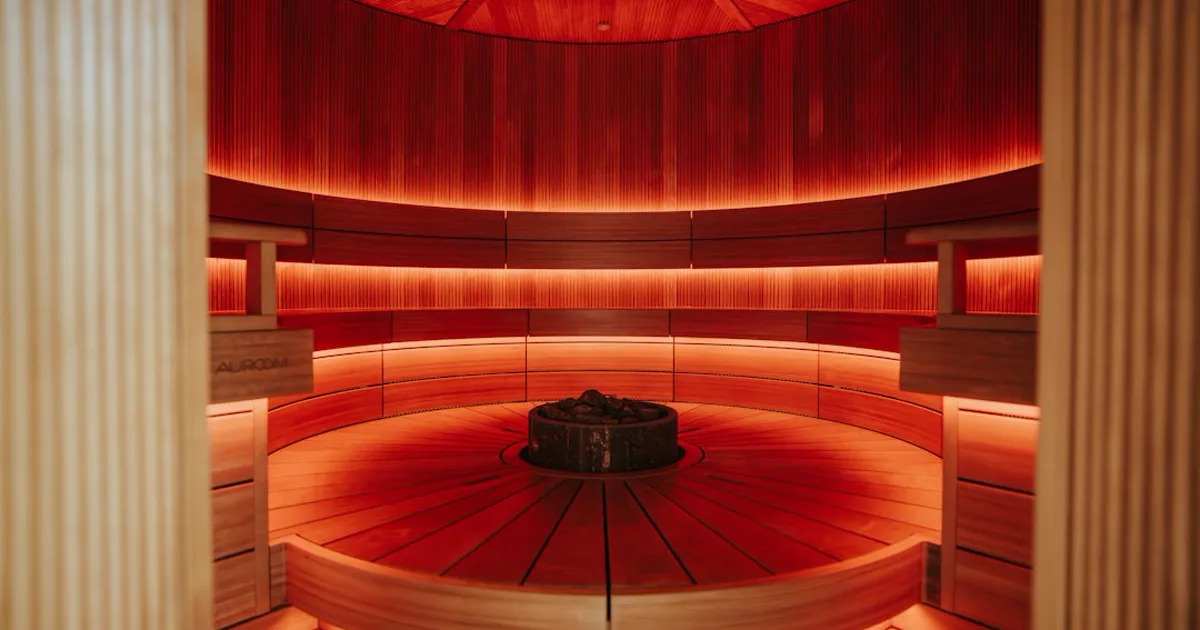
It's November. The sun sets before you leave work, and you've decided you want to try an infrared sauna. You've read about the sweat, the quiet, the warm twenty minutes that make a cold week feel shorter. Then you go looking for the price and hit a wall of articles written for Minneapolis, Austin and Scottsdale, none of which tell you what you'll actually hand over in East Bethel.
So here's the plain version. What an infrared sauna costs in Minnesota at the North Metro end of the market, how that stacks up against the Twin Cities and the national median, where the day pass and membership break-even points land, and what the math looks like if you're thinking about putting a cabin in your own basement instead.
What an Infrared Sauna Session Costs in the North Metro
The straight answer
A single infrared sauna therapy session at 5D Wellness in East Bethel is $12. A day pass that opens up every therapy in the building for that visit is $28. Neither requires a membership. You don't have to commit to anything to walk in and try it once.
That $12 buys time in a private infrared sauna room rather than a spot on a shared bench — worth naming, because a good chunk of sauna pricing elsewhere in the metro is for communal sessions. The rooms run full-spectrum infrared with red light panels built into the walls, and there are six preset programs plus a quick-start mode if you'd rather not read a menu while standing there in a towel.
How long you're in there
Cleveland Clinic's general guidance is 15 to 20 minutes for regular sauna users, and around five minutes for a first session, building up gradually from there. Infrared cabins also run cooler than traditional ones — roughly 110 to 135 degrees rather than 150 to 195 — which is why the sit tends to feel comfortable instead of like a dare.
The practical upshot for your wallet: there's no per-minute meter. A cautious eight-minute first visit costs the same $12 as a full twenty. If you want the whole walkthrough before you book, we wrote up what a private sauna booking looks like start to finish.
How North Metro Prices Compare to Minneapolis and the Rest of the Country
The national picture
A September 2026 price index collected 203 prices from 114 venues across 22 US cities and put the median infrared-sauna-only session at $40, with the full range running from $20 to $75. That's the number most national articles are quietly built on.
The Twin Cities picture
The same index logged nine metro venues and 18 prices. Private infrared sessions came in commonly at $40. Community wood-fired sessions ran $20 to $38. The median single visit landed at $35 — and the index named the Twin Cities one of the three least expensive sauna markets in the country, alongside Denver-Boulder and Seattle.
Where that leaves East Bethel
Twelve dollars sits well under the local median and roughly a third of the national one. The North Metro is the inexpensive end of a market that's already inexpensive by national standards.
Some of that gap is just geography. If you live in Ham Lake, Andover, Blaine, Cedar, Oak Grove or St. Francis, the alternative is usually twenty-five minutes down 65 toward Northeast Minneapolis, a parking ramp, and a session priced for a neighborhood where the rent is higher. The savings are partly in the price and partly in the drive you're not making on a January evening.
Single Session, Day Pass or Membership: Where the Break-Even Lands
The three prices side by side
Single infrared session, $12. Day pass covering everything in the building for one visit, $28. Membership tiers start at $99 a month plus a one-time $77 enrollment, with Premium at $149, Elite at $189, and a shared For Two plan at $180. Every tier includes unlimited infrared sauna along with cold plunge, contrast therapy, red light, the bio mat and halotherapy, plus 24-hour access.
Doing the arithmetic out loud
The national rule of thumb says an unlimited membership beats paying per visit at about four visits a month, because the typical unlimited plan runs $179. At $12 a session, that math moves. Measured against the single-session price, a $99 membership starts paying for itself somewhere past eight visits a month. Measured against the $28 day pass, it tips at around four.
Which is to say: if you're coming once or twice a month for a sauna and nothing else, the single session is genuinely the right call, and we'd rather tell you that than sell you a plan you won't use. The membership is for people building a habit, or for anyone who wants the sauna and the plunge and the salt room in one visit without counting line items. There's a longer breakdown in our piece on drop-in versus membership pricing.
How often do people actually want to go?
One session isn't a throwaway. In a controlled trial, participants who sat in an infrared sauna for 20 minutes after resistance training reported less muscle soreness and lost less explosive power than those who rested passively, and the session didn't disturb their sleep that night. A single $12 visit has a point to it.
That said, the patterns people describe once they've been a few times tend to add up fast. A sauna after a late hockey practice in Blaine. A sauna after a morning on the ice in Isanti County. Twice a week from Thanksgiving through the thaw, because February in Minnesota is long and a warm twenty minutes helps. That's the membership conversation, and it usually starts after the first visit rather than before it.
What About Buying Your Own?
The upfront number
Compact plug-in indoor infrared cabins start around $2,100, with a typical two-person plug-in landing between $2,100 and $2,600, and larger outdoor infrared builds running toward $14,000. Plug-in models use a standard outlet, so often no electrician is involved. Hardwired units depend on how far power has to travel from your panel. And free shipping generally means curbside — not assembled in the corner of your basement.
Running it
Electricity is the small part of owning one. A two-person 120V cabin draws roughly 32 cents an hour, which works out to about $4 a month at three sessions a week. The real cost of a home sauna is the purchase, not the power bill.
The comparison nobody runs
Divide $2,100 by $12 and you get about 175 sessions. At once a week, that's more than three years of use before a home cabin catches up on price — and that doesn't count the square footage it permanently claims in a Minnesota basement or garage.
What you also don't get at home is the cold plunge in the next room, the salt room, the 24-hour door, or somebody else wiping down the bench. None of which makes owning a bad idea. If you'll genuinely use it most days for years, buy it. If you're honest that it'll be a couple times a week in winter and forgotten by June, the per-visit math out here favors going somewhere.
Frequently Asked Questions
How much does an infrared sauna session cost in the North Metro?
At 5D Wellness in East Bethel, a single infrared sauna session is $12, and a $28 day pass opens up every therapy in the building for that visit. For comparison, a 2026 price index covering 114 venues in 22 US cities put the median infrared-sauna-only session at $40, and the Minneapolis-St. Paul median single visit at $35. No membership is required to book a single session.
Is a sauna membership cheaper than paying per visit?
It depends on how often you actually go. Memberships start at $99 a month plus a one-time $77 enrollment fee and include unlimited infrared sauna, cold plunge, red light, halotherapy and contrast therapy with 24-hour access. At $12 a session, a membership starts paying for itself somewhere north of eight visits a month, so it suits people building a two-or-three-times-a-week habit rather than someone dropping in once a month.
How long is an infrared sauna session, and does a longer one cost more?
Cleveland Clinic suggests 15 to 20 minutes for regular sauna users and about five minutes for a first try, building up from there. At 5D the $12 covers your session in a private room rather than a per-minute meter, and the cabin runs six preset programs plus a quick-start mode, so you can keep a first visit short without paying for time you didn't use.
Is it cheaper to buy an infrared sauna for my house?
Only if you use it a lot, for years. A compact plug-in indoor infrared cabin starts around $2,100 and larger outdoor units run toward $14,000, before delivery, any electrical work, and the floor space it permanently occupies. Electricity is the small part, roughly 32 cents an hour for a two-person 120V cabin. At $12 a session, $2,100 buys about 175 visits, which is three years of going weekly.
The Bottom Line
In the North Metro, the real cost of finding out whether you like an infrared sauna is $12. That's the whole barrier. Everything after it — day pass, membership, a cabin of your own — is a question about frequency, and frequency is something you can't honestly estimate until you've gone once.
So start there. Book a session, sit for ten or fifteen minutes, and notice how the rest of that evening and the next morning feel. Let that decide the rest.
One honest note to close on: sauna heat is a wellness practice, not a fix for anything. And some people should check in with a provider before a first session — anyone who's pregnant, over 65, under 16, taking medications, or managing a heart or neurological condition.
This article is for general wellness and educational purposes only and is not medical advice. 5D Wellness services are not a substitute for professional medical care. Results vary by individual. Consult a qualified healthcare provider before starting any new wellness practice, especially if you are pregnant or have a medical condition.
This article is for general information only and is not medical advice.