
Infrared Sauna
Building a Sauna Routine That Supports Better Sleep
5D Wellness Team·11 min read·October 12, 2026
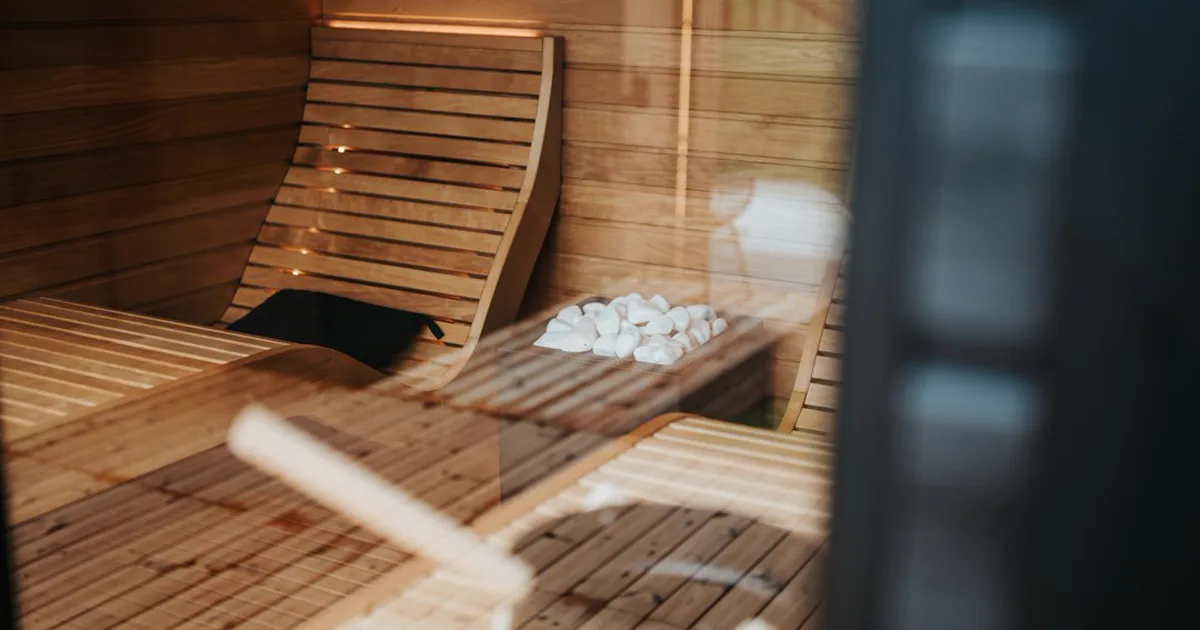
It gets dark here at 4:45 in January. The furnace runs all night and dries the bedroom out to something like desert air. And somehow, after all that darkness, the body still isn't ready to shut down at eleven. If you're in East Bethel or anywhere in the North Metro, you know this brand of winter tiredness — worn out at 7pm, wide awake at 11:30.
A sauna session is one of the few wind-down tools that works because of what happens after it ends. That detail changes how you'd build the habit. A sauna routine for better sleep comes down to three decisions — when you finish, how long you sit, how often you show up — and the first matters more than the other two combined.
Why the Cooldown Matters More Than the Heat
Your core body temperature doesn't hold steady through the day. It drifts down as bedtime approaches, and that drop is part of how your body prepares for sleep. Less a side effect of getting sleepy than one of the mechanics of it.
Heat gives that process something to push against. You warm up in the sauna, and when you step out your body gets to work shedding the heat — dilating the vessels near your skin, dumping warmth through your hands and feet. The Cleveland Clinic's framing is that the post-sauna cooldown may support your body's own temperature drop when the session lands before bed. That hedge is appropriate. It's a supportive effect, not a switch.
But it reframes the session entirely. People walk out thinking the twenty minutes of heat was the benefit. For sleep, the sixty minutes afterward is where the effect lives — the session is the setup, not the event. (Never sat in one? Our beginner's guide to infrared sauna covers what a first visit feels like.)
And be straight about the rest of it. Researchers reviewing the dry-sauna literature credit the reported improvements in well-being and sleep to a combination of things — endorphins, forced mindfulness, stress reduction, twenty minutes out of a busy day. Thermoregulation is part of the story. A warm wooden room with your phone in a locker is another part.
Timing Your Session for the Sleep You Want
Aim to finish one to three hours before bed
This is the decision that does the heavy lifting. In a study of older adults, hot-water bathing 61 to 120 and 121 to 180 minutes before bedtime was associated with significantly shorter sleep onset latency — people fell asleep faster — alongside a higher distal-proximal skin temperature gradient. That gradient is the measurable version of what we just described: warmth moving out through the extremities as the core cools.
Scheduled version: finish one to three hours before you want to be asleep.
Why too close to bedtime backfires
Step out of a 130-degree room and into bed fifteen minutes later and you've left no room for the rebound. You go to bed warm, and warm is the opposite of what the handoff into sleep wants. The same heat that helps at 8pm works against you at 10:20.
So run the math on your own evening. In bed at 10:30 means a 7:30 or 8:00 session, home by 8:45, lights down after that. Shift workers and hockey parents — anchor it to your bedtime, not the clock.
One Minnesota caveat
In February, the drive home from East Bethel is a cooldown whether you planned it or not. But don't walk out of the sauna into a five-degree parking lot. Cardiologists recommend cooling down gradually rather than stepping into cold air right after a session. A few minutes indoors, a layer on, then head out.
How Long and How Hot Your Session Should Be
Fifteen to twenty minutes is the real-world norm
No need to white-knuckle a forty-minute session. When researchers surveyed sauna habits in northern Sweden, most sauna bathers spent 15 to 20 minutes per session with one or two bouts. Protocols in the research literature cluster in roughly the same place — 15 to 30 minutes.
Start shorter than you think you need to
If you're new, the guidance is consistent and conservative. The Cleveland Clinic suggests starting around 110 degrees for five to ten minutes and building from there, capping sessions at 20 to 30 minutes once you're used to them. Harvard Health goes further for a first visit: five minutes, paying attention to how you feel. Lightheadedness or real overheating is your cue to step out, not push through.
Infrared versus traditional, for an evening session
Infrared saunas run around 110 to 140°F. Traditional Finnish saunas run 150 to 195°F. Same sweat, different experience — infrared is gentler and easier to actually relax in, which matters when the point is winding down rather than testing yourself. Neither beats the other for sleep specifically, so pick the one you'll sit in calmly for a full twenty minutes. Our infrared sauna sessions at 5D Wellness sit in that lower range for exactly that reason.
How Often to Book Without Overdoing It
Here's the part that surprises people: the benefits plateau earlier than you'd guess. In that same survey of 971 Swedish adults, sauna bathers reported greater satisfaction with their sleep patterns — 3.42 versus 3.17 on a five-point scale — than non-bathers. The interesting detail is what didn't happen. Sleep satisfaction held steady across every frequency group. Four times a week didn't beat twice a month, and mental health and energy scores leveled off at about one to four sessions a month too.
So two evenings a week is a defensible target, and one a week is a real routine rather than a half-measure. Pick fixed evenings — Tuesday and Sunday, say — instead of going when you get around to it. The schedule is the active ingredient; the heat is what you do once you're there. Thinking about building your own setup? We compared at-home versus studio sauna on cost and practicality.
Building the Rest of the Wind-Down Around It
The ninety minutes after
Protect them a little. Lower the lights, skip the second screen, let the cooldown do its work. A cool-to-lukewarm shower rinses off the sweat and nudges the temperature drop along.
Hydration needs sizing for the hour. You lose real fluid in a session, but 32 ounces at 9:45pm just swaps a sweat deficit for a 2am bathroom trip. Drink steadily before and during, modest glass after. And skip alcohol around sauna use entirely.
Minnesota-specific friction
Two local things undercut an otherwise good routine. Furnace-dry air in a Ham Lake or Andover bedroom will undo some of the comfort you just paid for — a cheap humidifier does more for winter sleep than most supplements. And the 4:45pm sunset shifts everyone's internal evening earlier. Use that rather than fighting it; an 8pm session feels late in June and normal in December.
What pairs well — and what doesn't
A magnesium wind-down routine is an easy adjacent habit if you're already building an evening ritual. Cold plunge is the one to watch: stimulating for a lot of people, which is useful at 7am and counterproductive at 9pm. If you want both in your week, put plunge sessions earlier in the day and let the evening sauna stand alone.
One boundary worth stating plainly — sauna complements movement, it doesn't substitute for it. Harvard's sports cardiologist is explicit that sauna should sit alongside exercise, even though a session can leave you feeling a bit like you just worked out.
When to Skip a Session or Check With Your Provider First
Heat isn't right for everyone. A few situations call for a conversation with your own provider first:
- Pregnancy — skip the sauna.
- Heat sensitivity, including multiple sclerosis — many people with MS are heat-sensitive, and the Cleveland Clinic advises against infrared saunas in that case.
- Low blood pressure, valve disease such as aortic stenosis, or heart failure — saunas temporarily lower blood pressure, so Harvard Health flags these for caution.
- Currently sick — wait. Heat is a stressor on a body already working.
- Men actively trying to conceive — reviewers note reversible reductions in sperm count with regular sauna use, and suggest stepping away during that window.
Whatever your situation: get out if you feel dizzy, nauseated, or lightheaded. That's not toughness, just the right call.
Frequently Asked Questions
How long before bed should I use a sauna?
Roughly one to three hours before you want to be asleep. One study of older adults found bathing 61 to 180 minutes before bedtime was associated with significantly shorter sleep onset latency. The reason is thermal — the session needs to end early enough that your rebound cooldown has finished by the time your head hits the pillow. End ten minutes before bed and you're warm and restless instead of drowsy.
Is an infrared sauna better than a traditional sauna for sleep?
Neither has been shown to beat the other for sleep specifically. The practical difference is comfort: infrared runs around 110 to 140°F, traditional Finnish saunas 150 to 195°F, so infrared is gentler and easier to sit in for a full 15 or 20 minutes. If you're new to heat, the lower temperature is usually the easier place to start.
How many sauna sessions a week do I need to notice a difference in sleep?
Fewer than most people assume. In a 2022 survey of 971 adults in northern Sweden, people who used a sauna at least once a month reported better sleep satisfaction than non-users, and the wellbeing benefits leveled off at about one to four sessions a month. Two a week is plenty for most people building a routine.
Should I shower or cold plunge after an evening sauna session?
A cool-to-lukewarm shower is a reasonable way to rinse off and start the cooldown. A full cold plunge is a different story on a sleep night — plunging is stimulating for a lot of people, useful in the morning and counterproductive at 9pm. Put plunge sessions earlier in the day and keep the evening sauna standalone.
Your Next Two Weeks
Three decisions and you have a routine: finish one to three hours before bed, keep the session to 15 or 20 minutes, show up twice a week on evenings you've actually picked. Nothing here is exotic. It's mostly putting the heat in the right slot, then getting out of your own way for the hour that follows.
And remember what the evidence actually says — this supports your body's own pre-sleep temperature drop, it doesn't override anything. Pick two evenings this week, keep the rest of the wind-down boring, and see what the first fortnight feels like. If you'd rather just start, book an evening slot and find out how an 8pm session lands on your particular sleep.
This article is for general wellness and educational purposes only and is not medical advice. 5D Wellness services are not a substitute for professional medical care. Results vary by individual. Consult a qualified healthcare provider before starting any new wellness practice, especially if you are pregnant or have a medical condition.