
Red Light Therapy
Red Light Therapy for Golfers: A Spring Tune-Up for Your Swing in the North Metro
5D Wellness Team·8 min read·August 30, 2026
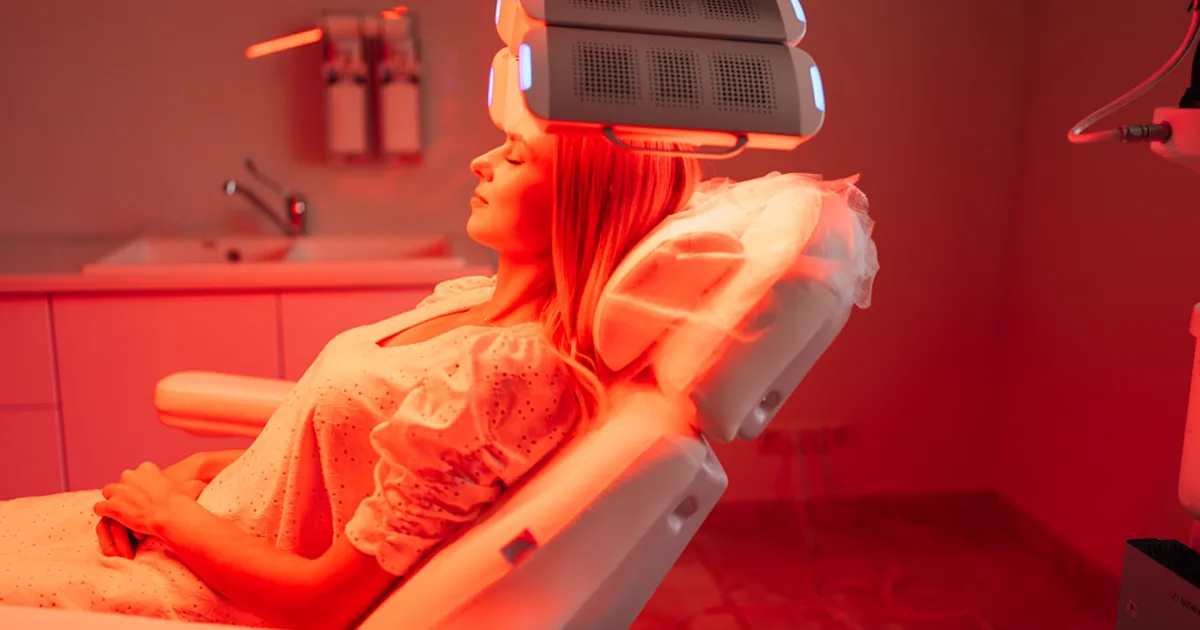
The first genuinely warm weekend in the North Metro is a kind of local holiday. Driveways thaw, grills come out, and every golfer from Blaine to Ham Lake starts eyeing the course after a long Minnesota winter spent swinging in a garage bay—if they were lucky. Then that first full round hits: a stiff lower back, sore shoulders, and forearms that forgot what eighteen holes feels like.
A spring tune-up isn't just about your grip or your gear. It's about getting your body ready to move well and bounce back faster. One low-effort tool worth knowing about is red light therapy—a supportive wellness practice that's caught the attention of athletes and recovery-minded folks. Let's walk through what it is, what the research actually shows for muscles, how to time a session, and how to fold it into a golf-season routine here in Anoka County.
What Red Light Therapy Actually Does
Red light therapy, sometimes called photobiomodulation or low-level laser therapy, uses specific wavelengths of red and near-infrared light—roughly 600 to 1070 nanometers. Your cells absorb that light, and according to the Cleveland Clinic's overview of red light therapy, certain cells are then stimulated to work a little differently. You sit or stand near the panel. No heat blast, no needles, nothing dramatic—it's one of the calmer things you can do for your body.
Now the lightly technical version. Red and near-infrared photons are absorbed by an enzyme in your mitochondria called cytochrome c oxidase. Because muscles lean heavily on ATP—the body's cellular fuel—for the work of a golf swing, researchers studying photobiomodulation in human muscle tissue have explored how supporting that energy step may aid circulation and help calm inflammation after exertion. Think of it as a gentle nudge to processes your body already runs, not a shortcut around them. It's a supportive practice, not a medical procedure.
So why golfers specifically? Golf is deceptively demanding. The swing is rotational, repetitive, and one-sided, loading your lower back, shoulders, hips, and forearms in the same pattern hundreds of times. After months indoors, those tissues are rusty, and early-season soreness is almost a rite of passage in Minnesota. That's exactly the kind of everyday muscle recovery red light is most often studied for. If you want the full rundown of how our sessions work, here's more on red light therapy at 5D Wellness.
What the Research Says About Muscles and Recovery
The research picture is genuinely interesting, and worth understanding honestly rather than through hype.
Soreness and muscle damage
A narrative review of photobiomodulation in sports looked at dozens of studies and found that light applied before exercise was associated with reduced delayed-onset muscle soreness—the deep ache that shows up 24 to 96 hours after activity—along with improvements in muscle strength. In a randomized, triple-blind, placebo-controlled trial with CrossFit athletes, red and near-infrared light was linked to lower levels of creatine kinase (a marker of muscle damage) and interleukin-6 (a marker of inflammation), with benefits that showed up through 48 hours after the workout.
Performance and fatigue
That same sports review also reported reduced blood lactate, better fatigue resistance, and improved sprint performance across a range of athletes—soccer, rugby, volleyball, and more. For a golfer, the practical translation is less about sprint times and more about the idea that supporting recovery may help you feel fresher on the back nine and less wrecked the next morning. These are research findings on athletic populations, and individual results vary from person to person.
An honest caveat
Here's the part the marketing usually skips. In that sports review, a meaningful share of trials showed no significant benefit at all. Researchers point out that outcomes depend heavily on the dose and protocol used, and both the review authors and the Cleveland Clinic emphasize that larger, higher-quality studies are still needed. Red light therapy isn't a sure thing, and no one can promise a specific result. It's one supportive option among many—not a substitute for training smart, warming up, and giving your body time to adapt.
Timing and Dose: Getting the Most From a Session
Before or after your round
One of the more useful findings for golfers is that timing is flexible. Some studies apply light before activity to prime the muscles; others apply it afterward to support recovery. The CrossFit trial found benefits whether light was used before or after the workout—but interestingly, doing both at once produced diminishing returns, likely a case of too much of a good thing. For most golfers, a single well-timed session—on the day of a big round, or right after a range-heavy weekend—is a sensible place to start.
The sweet-spot idea
Red light appears to follow what researchers call a biphasic dose-response: there's a therapeutic window, and going past it doesn't add benefit—it can quietly subtract from it. The muscle-tissue review identified an energy window for lower-limb work rather than an "always more is better" pattern. That's a big reason a guided session tends to beat guessing with a gadget at home. The settings and timing are dialed in for you, so you spend your time in the useful range instead of chasing it.
Building Red Light Into Your Spring Golf Tune-Up
You don't need to reorganize your life around this. A realistic rhythm looks like a little mobility work to loosen your hips and thoracic spine, a red light session on your bigger range or practice days, and a recovery-focused visit after you've walked eighteen holes. Consistency during your busiest playing stretch matters more than intensity.
Red light also plays well with other recovery tools. Plenty of our neighbors pair it with sauna time for warmth and circulation, or follow a round with a cold plunge to feel fresh and reset. Curious how these routines stack together for different lifestyles? Our guide on how red light fits other recovery routines is a useful companion read. From our home base in East Bethel, we're a short drive for players in Blaine, Ham Lake, Andover, Cedar, and across the North Metro—easy to fold into the same trip as a bucket of range balls.
Frequently Asked Questions
Is red light therapy safe for golfers?
Red light therapy is generally well tolerated. In athlete studies, participants reported no adverse events, and the Cleveland Clinic notes it appears safe with no known side effects when used short-term and as directed. It's a supportive wellness practice, not a medical treatment—if you have a health condition, are pregnant, or take medication that affects light sensitivity, check with your healthcare provider first.
Should I use red light before or after a round of golf?
Research suggests both timings can help. Some studies apply light before activity to prime the muscles; others apply it afterward to support recovery. One athlete trial found benefits whether light was used before or after a workout—but doubling up on both gave diminishing returns. For most golfers, a session on the day of a big round or right after a range-heavy weekend is a practical starting point.
How is red light therapy different from a sauna?
A sauna heats your whole body to encourage sweating and circulation, while red light therapy uses specific red and near-infrared wavelengths that cells absorb at the mitochondrial level. They're complementary—many people at our East Bethel studio pair the two as part of a broader recovery routine rather than choosing one over the other.
How often should I do red light therapy during golf season?
There's no one-size-fits-all schedule, and research is still refining the ideal dose. A common, practical rhythm is a couple of sessions a week during your busiest playing stretch, adjusting based on how your body feels. Our team can help you map out a cadence when you visit.
Your Next Step This Season
Red light therapy won't fix your slice, but it's an accessible, well-tolerated way to support your body as you shake off winter and get your swing back. Approached as one piece of a smart spring tune-up—alongside mobility, sensible practice, and real rest—it may help you feel looser and recover a little easier through a full Minnesota golf season. Results vary, and it's a wellness practice rather than medical care, so listen to your body and ask a professional if you have questions. When you're ready, book a red light session at 5D Wellness in East Bethel and start the season on the right foot.
This article is for general wellness and educational purposes only and is not medical advice. 5D Wellness services are not a substitute for professional medical care. Results vary by individual. Consult a qualified healthcare provider before starting any new wellness practice, especially if you are pregnant or have a medical condition.