
Red Light Therapy
Red Light Therapy for Night-Shift Nurses: A North-Metro Guide to Alertness and Recovery
5D Wellness Team·8 min read·August 28, 2026
The 3 A.M. Wall
If you nurse the night shift at a hospital, clinic, or care home anywhere around Anoka County, you know the feeling. Somewhere between two and four in the morning, your body decides it's done — even though your patients, your charting, and your shift are not. That wall isn't a character flaw. It's your internal clock doing exactly what millions of years of evolution built it to do: wind down when it's dark.
Light is one of the most studied, most practical levers we have for nudging that clock. And within the world of light, red light has become an interesting talking point for shift workers. So let's take an honest look — this is a wellness guide, not medical advice — at how red light differs from the harsh blue-white glow of a nursing station, what the research actually shows about alertness, and how North-Metro nurses might work a red light therapy session into a shift routine.
Why Night Shifts Make Alertness So Hard
Your body runs on a roughly 24-hour circadian rhythm. When the sun goes down, a hormone called melatonin rises and quietly tells your brain and body it's time to rest. Night-shift work asks the opposite: be sharp and on your feet during the exact hours your biology is nudging you toward sleep.
You're far from alone in this. Shift work affects roughly 20 to 25 percent of the global workforce, and it's consistently linked to sleepiness, reduced productivity, and higher safety risk on the job. Nurses feel it acutely, because the work demands precision at the very hours the body resists.
Here in the North Metro, our long, dark Minnesota winters add another wrinkle. When the sun barely shows up for months, the daytime sleep that night-shift nurses count on gets even harder to protect. The good news? Light — the right kind, at the right time — is a tool you can actually work with.
Why Red Light Is Different from Blue and Bright White Light
Not all light speaks to your body the same way. The blue-heavy, bright white light pouring out of overhead panels and phone screens is the strongest signal you can send your clock that it's daytime. Wonderful at 8 a.m. A problem at 3 a.m. — because it's also the biggest suppressor of melatonin.
Red light sits at the gentle end of the spectrum. In a study comparing wavelengths, researchers found that red light around 631 nanometers suppressed melatonin far less — and far less durably — than blue light around 464 nanometers. Over three evening hours, melatonin under red light was allowed to recover (16.6 versus 8.3 picograms per milliliter at the three-hour mark), while blue light kept it pinned down.
If you want the deeper comparison, we walk through it in our guide to red versus blue light. The short version for a nurse: red light is the softer, warmer end of the spectrum, which is exactly why it's an appealing option to explore for alertness support with less of a hit to your natural wind-down. That's a wellness angle, not a promise.
What the Research Says About Red Light and Nighttime Alertness
Here's where it gets genuinely interesting. In laboratory work from the Figueiro group, participants exposed to both blue and red light at night showed the brain-activity signature of alertness — lower alpha waves (linked to drowsiness) and higher beta waves (linked to being awake and engaged). What stood out is that only the brightest blue light meaningfully suppressed melatonin. Red light nudged people toward alertness while their melatonin kept rising, which hints that red light's wake-up effect may travel a pathway separate from the circadian system.
That's a hopeful finding for anyone who needs to stay sharp overnight without wrecking the sleep that has to follow. But good wellness writing owes you the caveats too.
When researchers gave night-shift ICU nurses very bright light, the nurses reported feeling less sleepy — but actually made more small motor errors on precision tasks. And a broader systematic review of bright light for shift-working nurses found favorable effects on sleepiness and alertness in some analyses, but so much variation between studies that the authors called the evidence promising rather than settled.
The honest takeaway: light is a real, useful tool — not a switch that erases the challenges of night-shift biology. Go in with realistic expectations and it can be a supportive part of your routine.
Fitting Red Light into a Night-Shift Routine
So how might a working nurse actually use this? A few practical, low-pressure ideas:
- Before a shift: a calm red light session can anchor a gentle wind-up ritual as you shift your body toward "on."
- After a shift: many North-Metro clients pair red light with heat or cold to decompress. You might unwind after a nursing shift with a sauna, or reset after a night shift with a cold plunge.
- Protect your daytime sleep: once you're home, keep the lights dim and warm, pull the blackout curtains against that bright Minnesota morning, and go easy on the phone screen before you try to sleep.
Consistency tends to matter more than intensity. Pick a rhythm you can actually keep, and pay attention to how your own body responds — every nurse's clock is a little different.
What to Expect from a Red Light Session in East Bethel
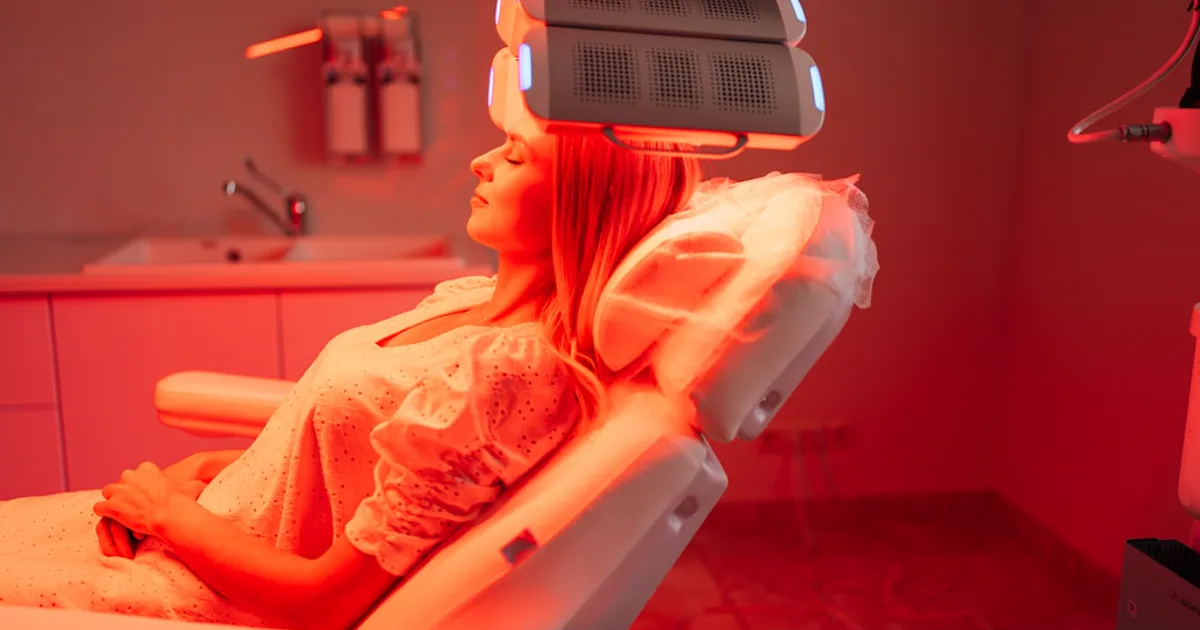
If you've never tried it, a red light session is refreshingly simple. You settle in front of a panel that gives off a warm, deep-red glow, get comfortable, and relax for a set stretch of time — no heat, no noise, nothing you have to do. Eye comfort is easy to manage, and a friendly staff member will walk you through it your first visit.
We designed red light therapy at 5D Wellness to be convenient for busy people, which very much includes nurses coming off a shift. We're right here in East Bethel, an easy drive for the North Metro — Ham Lake, Andover, Blaine, Cedar, Anoka, and the towns in between.
Frequently Asked Questions
Can red light therapy keep a night-shift nurse awake?
Research on ambient red light suggests it can raise alertness markers at night without the strong melatonin suppression that comes from bright or blue-heavy light. That is different from a red light therapy panel session, which most people use for skin and recovery support rather than as a stay-awake tool. Think of red light as one supportive piece of a broader night-shift routine, not a stimulant.
Will red light hurt my sleep after a night shift?
Studies comparing wavelengths found red light (around 631 nm) suppresses melatonin far less than blue light (around 464 nm), so it is generally considered less disruptive to the body's natural wind-down. Everyone is different, though, and timing, brightness, and your own sensitivity all matter. If sleep is a struggle, talk with a healthcare provider.
When should a nurse book a red light therapy session?
Many North-Metro clients fit a session in before a shift as part of a calm pre-work routine, or after a shift alongside a sauna or cold plunge to wind down. There is no single right time — it comes down to your schedule and how your body responds.
Is red light therapy available near Anoka County?
Yes. 5D Wellness in East Bethel offers red light therapy along with infrared sauna, cold plunge, halotherapy, and massage, serving Ham Lake, Andover, Blaine, Cedar, Anoka, and the surrounding North Metro.
The Bottom Line
Red light is the gentle end of the light spectrum — well studied enough to say it can support nighttime alertness with less of a hit to melatonin than blue or bright white light, and honest enough to admit it's a supportive tool, not medicine. For North-Metro nurses fighting the 3 a.m. wall, the real win is a routine that keeps you sharp on shift while protecting the sleep you need afterward. If you want to try it locally, come see us in East Bethel and feel the difference for yourself.
This article is for general wellness and educational purposes only and is not medical advice. 5D Wellness services are not a substitute for professional medical care. Results vary by individual. Consult a qualified healthcare provider before starting any new wellness practice, especially if you are pregnant or have a medical condition.