
Local Wellness
Finnish Sauna History in Minnesota: From Cokato to the North Metro
5D Wellness Team·7 min read·November 18, 2026
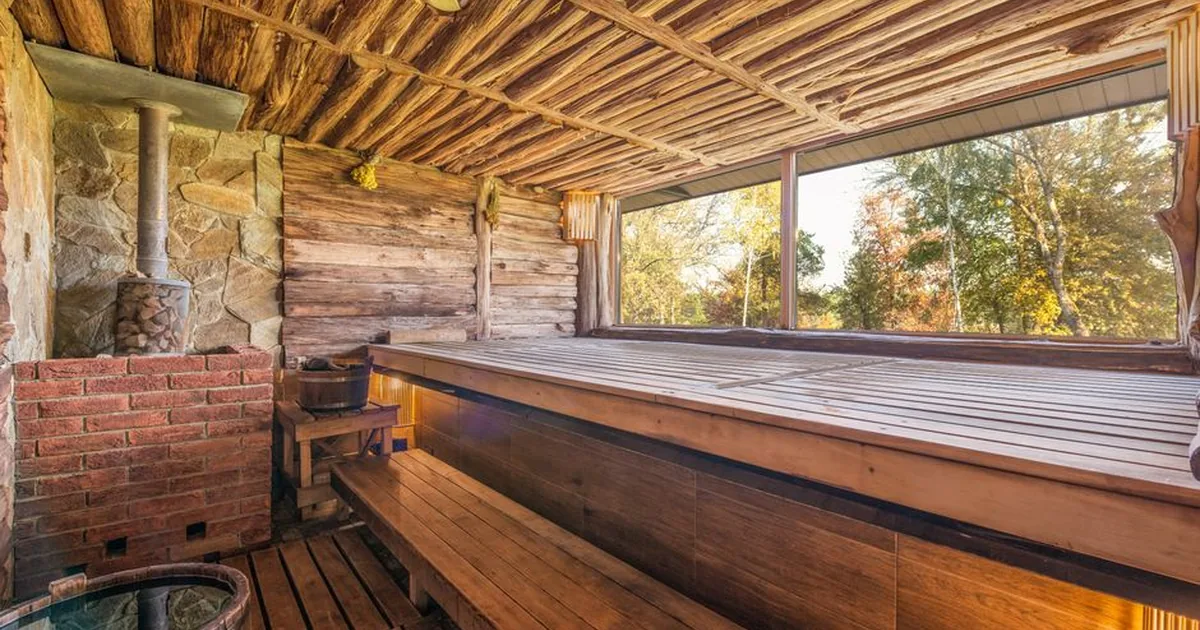
If you want to know where Minnesota's sauna habit comes from, start in a small wooden building on a rural corner outside Cokato. The Finnish sauna history Minnesota neighbors still talk about begins there, with a shared hut built in 1868. Here is how that story runs, from the first homesteads to the North Metro today.
Three families and one shared sauna in Cokato
Finns arrive in 1865
According to MNopedia, from the Minnesota Historical Society, Finns came to Cokato in 1865 looking for farmland. The Barberg, Selvälä and Salmonson families were among the town's first settlers, and by 1868 their homesteads sat side by side. That year they agreed to build one sauna together, right on the property line between two of the farms.
What a savusauna is
The building was a savusauna, a smoke sauna. It was a plain wooden room with a hearth of stones, a wooden platform near the roof for bathers who wanted the hottest air, and lower steps and a bench for those who wanted less. A fire burned through the day. Then it was allowed to go out and the smoke was let clear, while the hot rocks kept the room warm for hours. Bathers sweated, then cooled off outside, rinsed with cold water or rolled in snow, and sometimes used birch whisks on their skin.
No dressing room, either. On remote land that was fine. Later it caused trouble.
Built before the house
The same MNopedia entry notes that a sauna was often the first building a Finnish family put up on new land. They could wash in it, and even live in it, while the rest of the farm went up around them. Bathhouse and shelter in one: a fair answer to what a rural Minnesota winter asked of a first building.
The 1885 dispute and a long trip down the road
As Cokato grew, a town road was laid out along the same property line, right beside the sauna. Neighbors who were not Finnish complained. A photo caption in PBS's Steam of Life gallery puts it plainly: the sauna was moved from its roadside spot because neighbors objected to public nudity.
In 1885 the matter went to court. By then the Selvälä family had bought out the other two shares. They showed the court they were respectable Lutherans who used the sauna only to get clean, and they won $30 in damages. The court still ordered them to move the building to a more private spot, and added $40 toward the move, per MNopedia. Nils Selvälä moved it, used it afterward as a shed, and put the court money toward a larger sauna elsewhere on the farm.
The 1868 building was moved several more times over the years. In 1979 it went to its current home at Temperance Corner, named for a social hall built there in 1896. It became part of a group of buildings that celebrate the area's Finnish heritage. The Cokato Finnish-American Historical Society looks after it, and it was repaired and restored to its original appearance in 2008. MNopedia describes it as the oldest savusauna still standing in Minnesota and likely in the United States.
A 2023 CBS Minnesota report adds some texture. The sauna measures 10 by 12 feet. Families heated it to about 180 degrees, often with a fire going all Saturday, and it doubled as a laundry room and a Saturday meeting place. The historical society's president told the station that the sauna's dovetail corners let water drain off so the wood does not rot, which he gave as a main reason it has lasted 155 years.
A sauna on nearly every Finnish farm
Cokato wasn't a one-off. The same PBS gallery draws on Michael Nordskog's 2010 book The Opposite of Cold: The Northwoods Finnish Sauna Tradition, published by the University of Minnesota Press. It reports that in the 1960s, cultural geographer Matti Kaups of the University of Minnesota Duluth found a sauna outbuilding to be a telltale marker of Finnish identity on farms. He counted saunas on 90 percent of Finnish American farmsteads, a higher share than on farms in Finland itself. Among Finnish Americans, he noted, the sauna competed well with television as an evening activity.
That says a lot. A sauna wasn't an extra. It was part of how a family ordered its week, and for many, the place a neighborhood gathered on Saturday.
From smoke sauna to the North Metro
What does a modern session look like next to an 1868 savusauna? A 2018 systematic review of dry sauna bathing describes the traditional Finnish style as short sessions of 5 to 20 minutes at 80°C to 100°C, in dry air at 10% to 20% relative humidity, with water thrown over the heated rocks now and then for a brief burst of steam. The same paper puts infrared cabins at a lower 45°C to 60°C, with no added humidity.
That difference in temperature is one reason people choose between the two, and it is a practical thing to know before you pick a room. In East Bethel, 5D Wellness offers infrared saunas, and our guide on what to know before you book an infrared sauna walks through what a visit looks like. If you are weighing visit options, the sauna hours post covers when the doors are open.
The wood-fired hut and the infrared cabin are different rooms with different heat. What they share is the habit. Set aside some time, get warm while the Minnesota weather does its worst outside, and share the space with neighbors.
Cokato today
The Cokato area still has a sauna business of its own. The CBS Minnesota report says a sauna builder based in Cokato, partly based in Finland, has sold thousands of saunas. The 1868 savusauna still stands at Temperance Corner, three miles north of Cokato on County Road 3, according to the same report. It makes a good drive from Anoka County, but check with the Cokato Finnish-American Historical Society before you go, since none of the sources we read list visiting hours.
The short version
Minnesota's sauna tradition came with the first Finnish farms. Three families built a shared smoke sauna in Cokato in 1868, a court made them move it in 1885, and it has been standing, moved and restored, ever since. In the 1960s, a researcher found one on nine out of ten Finnish American farmsteads. If you would like to know more about the neighborhood behind this blog, read about 5D Wellness.
Frequently Asked Questions
Where is the oldest smoke sauna in Minnesota?
MNopedia describes the Barberg-Selvälä-Salmonson sauna in Cokato as the oldest savusauna still standing in Minnesota and likely in the United States. It now sits at Temperance Corner, cared for by the Cokato Finnish-American Historical Society.
What is a savusauna?
A smoke sauna. A fire heats a hearth of rocks, then is allowed to burn out and the smoke clears before bathers go in, while the rocks keep the room hot for hours.
Why did Finnish settlers build the sauna first?
Per MNopedia, a sauna was often the first building on new rural land, since settlers could bathe and live in it while they raised the other farm buildings.
How hot is a traditional Finnish sauna compared with infrared?
A 2018 systematic review describes Finnish-style sessions of 5 to 20 minutes at 80°C to 100°C with 10% to 20% relative humidity, and infrared cabins at 45°C to 60°C with no added humidity.
This article is for general wellness and educational purposes only and is not medical advice. 5D Wellness services are not a substitute for professional medical care. Results vary by individual. Consult a qualified healthcare provider before starting any new wellness practice, especially if you are pregnant or have a medical condition.
This article is for general information only and is not medical advice.