
Red Light Therapy
Red Light Therapy for Hair and Scalp Wellness: A North-Metro Guide
5D Wellness Team·7 min read·August 14, 2026
Why Your Scalp Deserves a Little Light
Noticed a few more strands in the brush lately? Maybe more than usual as another long Minnesota winter drags on. You're not imagining it, and you're far from alone. Thinning or shedding hair is one of the most common wellness worries our neighbors around East Bethel and the North Metro bring up — and it's the kind that sends people spiraling down a rabbit hole of pricey products and bigger promises.
Red light therapy has earned real curiosity, and for good reason: it's gentle, non-invasive, and backed by a growing body of research. This guide walks through how red light is thought to support the scalp, what randomized studies actually found, what results realistically look like, and how to fold it into a simple seasonal routine. Think of it as supportive wellness — one small habit, not a cure-all.
What Red Light Therapy Does for the Scalp
The core idea is surprisingly down-to-earth. Certain wavelengths of red and near-infrared light appear to give your cells a little energy boost. According to the Cleveland Clinic, red light therapy is thought to act on the mitochondria — the tiny "power plants" inside your cells — helping them produce more energy so they can function and repair more efficiently. Want the deeper science? We broke it down in our piece on how red light works at the cellular level.
From resting follicles to growing ones
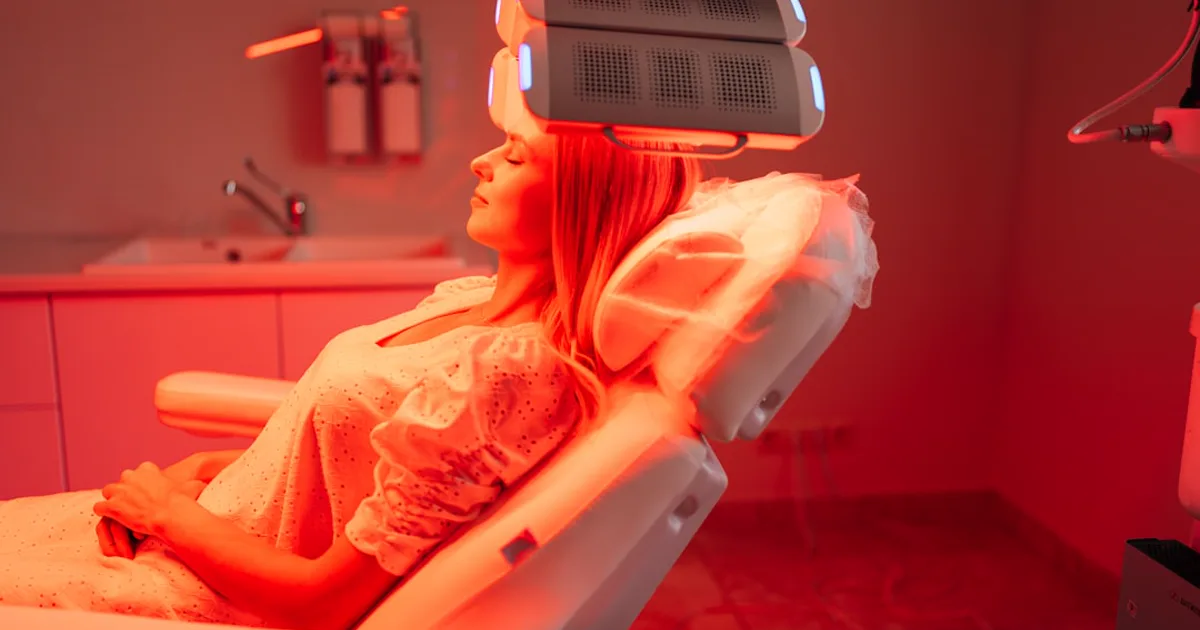
With hair specifically, researchers think the light may wake up follicles that have gone quiet. Each follicle cycles through a resting phase (telogen) and an active growth phase (anagen). The leading theory, described in a randomized study published in the National Library of Medicine, is that red light coaxes resting follicles back into the growth phase and keeps them there longer. It's subtle and cumulative — not a switch that flips overnight. Locally, you can experience it as red light therapy at 5D Wellness, where sessions are quick and comfortable.
What the Research Shows for Thinning Hair
Here's where red light therapy stands apart from a lot of wellness trends: there's real, controlled research behind it.
The women's trial
In a randomized, sham-controlled study of women with pattern thinning, participants used a helmet-style device emitting light at 655 nanometers every other day for 16 weeks. The group getting real light saw roughly a 37% greater increase in hair counts than the placebo group. Just as important: no adverse events or side effects were reported. That mix of measurable results and a clean safety record is what makes the study stand out.
The men's trial
A parallel trial in men using the same 655 nm approach found about a 35% improvement in hair counts versus sham treatment. Nearly identical outcomes across both studies suggest the underlying mechanism works about the same regardless of who's using it.
Reading the evidence honestly
Now for the neighborly straight talk. These results are encouraging, but the science is still maturing. As the Cleveland Clinic notes, many studies in this space are small, and researchers agree more trials are needed to fully understand who benefits most and why. Red light therapy is a supportive wellness practice worth exploring — not a sure thing, and never a replacement for advice from your own healthcare provider.
What to Realistically Expect
If there's one thing to take away, it's this: patience wins. Dermatologists quoted by Harvard Health describe red light as "slow and steady" — not a quick fix. Most people are advised to give it a consistent four-to-six-month window before judging the results.
The cadence in the research is refreshingly doable: short sessions, every other day, over several months. It rewards routine more than intensity, so the real challenge isn't any single session — it's showing up regularly. Mapping out a schedule? Our beginner's guide to how long and how often to use red light is a practical place to start. And remember, hair wellness is rarely about one thing. Sleep, stress, nutrition, and gentle scalp care all play their parts alongside it.
Safety and Who Should Check With a Professional
One of red light therapy's biggest appeals is how gentle it is. No UV light, non-invasive, and the documented short-term side effects are minimal — sometimes a little temporary warmth or redness. That said, the long-term safety of consumer devices is still being studied, so it's smart to use quality equipment and follow session guidance rather than overdoing it. Eye comfort matters too; our overview of red light therapy safety basics covers the simple precautions.
A few people should loop in a professional first: anyone who is pregnant, has an active scalp condition, or takes medication that increases light sensitivity. When in doubt, a quick conversation with your healthcare provider is always the right call.
Making Red Light Part of a Minnesota Winter Routine
Honestly, there's no better time to build this habit than our long indoor season. When it's dark by late afternoon across East Bethel, Ham Lake, Andover, Blaine, and Anoka, a warm, screen-free red light session becomes an easy little ritual to look forward to. It pairs beautifully with a sauna visit or a quiet moment to decompress after work, and the consistency winter naturally encourages is exactly what the research rewards. Coming in to 5D Wellness makes it simple to stay regular — no device to fuss with, just a comfortable spot to sit and let the light do its slow, steady thing.
Frequently Asked Questions
Does red light therapy really help thinning hair?
Randomized, sham-controlled studies using 655 nm devices found meaningful increases in hair counts for both women and men with pattern thinning, and researchers reported no side effects. It's supportive wellness, not a cure, and results build slowly with consistent use — think months, not days.
How long before I might notice a difference?
Experts describe red light as slow and steady. Most studies ran sessions every other day for about 16 weeks, and dermatologists often cite a four-to-six-month window of consistent use before judging results. Patience and routine matter more than any single session.
Is red light therapy safe for my scalp?
Red light therapy doesn't use UV light, is non-invasive, and has minimal documented short-term side effects. Long-term safety of consumer devices is still being studied. If you're pregnant, have a scalp condition, or take light-sensitizing medication, check with a healthcare provider first.
Can I do red light for hair in the winter here in Minnesota?
Yes — and winter is a natural time to start. When it's dark by late afternoon in East Bethel and the North Metro, a warm, screen-free red light session is an easy habit to keep. Consistency through the long season is exactly what the research rewards.
Your Next Step
Red light therapy won't rewrite your genetics, but it's one of the more promising, genuinely gentle tools for supporting fuller-feeling hair — real research behind it, very little downside. The trick is treating it as a steady habit rather than a one-time quick fix. Curious what a session actually feels like? Book a red light session in East Bethel and start your own slow-and-steady stretch this winter.
This article is for general wellness and educational purposes only and is not medical advice. 5D Wellness services are not a substitute for professional medical care. Results vary by individual. Consult a qualified healthcare provider before starting any new wellness practice, especially if you are pregnant or have a medical condition.