
Infrared Sauna
Infrared Sauna for Isanti Residents: Worth the Drive?
5D Wellness Team·10 min read·October 8, 2026
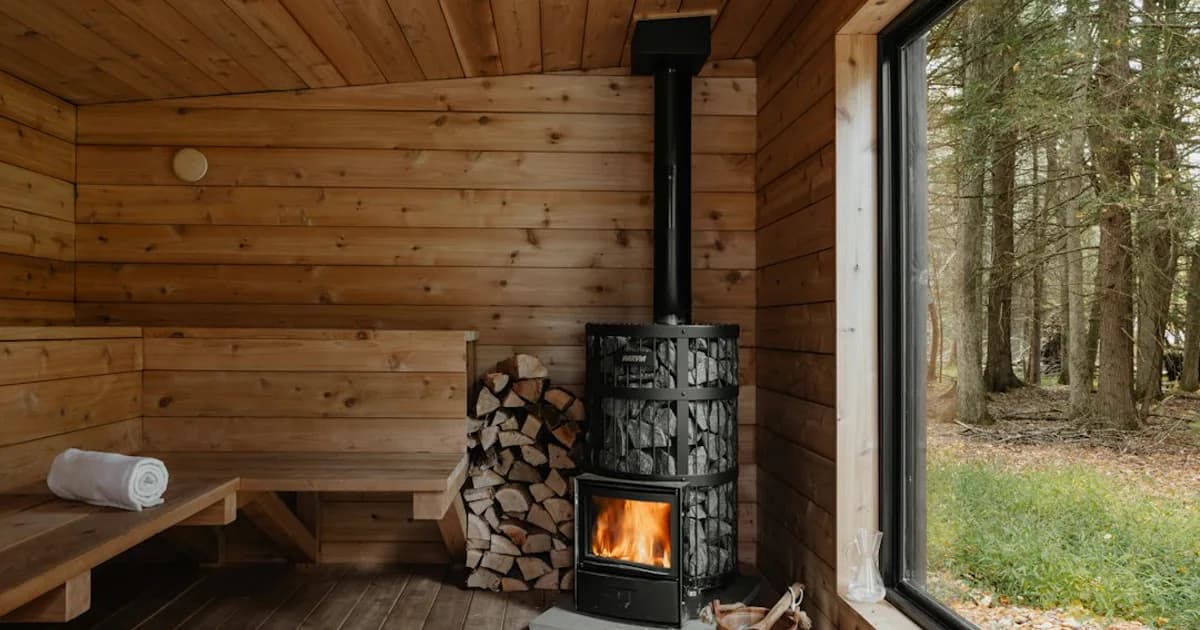
If you live in Isanti and you've been curious about an infrared sauna, the question probably isn't whether heat feels good in February. It's whether it's worth getting in the car. Looking for an infrared sauna in Isanti, MN means looking just south — our studio is in East Bethel, 14 miles down Highway 65, a 15-to-20-minute drive most days.
So here's the honest version of the question. Not "does infrared sauna work" in the abstract, but "does 14 miles of Highway 65 pencil out for me, most weeks of the year?" Below: what infrared heat actually is, what the research supports and where it thins out, what a first visit feels like, and who should talk to a provider before booking.
What an Infrared Sauna Actually Is (and How It's Different)
The heat works on you, not on the room
Most Minnesotans already have a sauna reference point — the cedar box at the gym, or a cabin sauna up north with rocks and a ladle. Those heat the air, and they get hot: Cleveland Clinic puts traditional saunas at 150°F to 195°F. Infrared works differently. The light warms your body directly, so the cabin itself stays considerably cooler — roughly 110°F to 135°F.
That gap matters more than it sounds like it should. You still sweat, plenty. But the air going into your lungs isn't scalding, and that's the specific thing that sends people back out the door of a hot-rock sauna after four minutes.
Why that distinction matters for a first-timer
You can sit comfortably for the whole session. People read. People talk. Some just close their eyes and let twenty minutes go by. If you've tried a traditional sauna and concluded that sauna "isn't for you," there's a decent chance you were reacting to the air temperature rather than the heat itself. The infrared sauna suite at 5D Wellness runs in that gentler range on purpose.
What the Research Actually Says — and Where It's Thin
The cardiovascular signal
Heat does real things to your circulatory system. Harvard Health describes heart rate climbing 30% or more during a session, enough that the heart nearly doubles the volume of blood it moves each minute. Cleveland Clinic's physicians call the overall response something that mimics exercise.
The bigger-picture data comes from Finland. A systematic review of 40 studies covering 3,855 participants pulled in cohort research on 2,315 people, where sauna use four to seven times weekly was associated with 40% lower all-cause mortality than once-weekly use, and 63% lower risk of sudden cardiac death.
Those numbers deserve an asterisk in bold. That's an observed association among regular Finnish dry-sauna bathers, not proof that heat caused the outcome. Someone who saunas five times a week may differ from a once-a-week bather in a dozen other ways.
Comfort, recovery, and mood
For the post-workout angle, two mechanisms come up again and again: better circulation, and the release of brain-derived neurotrophic factor, which Cleveland Clinic ties to muscle recovery. Researchers have also looked at joint stiffness and comfort, chronic pain, mood, sleep quality, and how easily people breathe.
Worth saying plainly: this is a wellness practice that supports how you feel, not care for a medical condition. If something hurts in a way that worries you, that's a conversation with your doctor, not a sauna appointment.
Where the evidence gets thin
Here's the part sauna marketing tends to skip. A review of far-infrared sauna trials found reported improvements in systolic blood pressure and in flow-mediated dilation — a vascular-health marker that moved from 4.0% to 5.8% in one at-risk group — using 15-minute sessions over two to four weeks. Then the same author lists the limitations: small samples, short durations, unvalidated symptom scales, and the awkward fact that every trial came from the same core research group. You also can't run a placebo sauna, so nothing is blinded.
The detox claims are weaker still, and the cholesterol claims weaker than that — the review found fair evidence pointing against them. In the broader review, only 13 of the 40 studies were randomized, and most enrolled fewer than 40 people.
Net read: promising, low-risk for most healthy adults, genuinely pleasant, not a substitute for anything. Anyone promising a specific outcome is selling, not informing.
Why a Sauna Habit Fits the Isanti Calendar
The winter case
From November through March, nobody in Isanti or Cambridge is getting properly warm anywhere. Not in the truck. Not in the garage. Definitely not standing on a lake at 7 a.m. Twenty minutes of deep, dry heat in the middle of that stretch does something for your mood that's hard to quantify and easy to recognize. Deep winter is when most of our Isanti regulars first walked in.
The rest of the year
Spring brings yard work and the first long runs. Summer brings lake weekends and the soreness of hauling a boat around. Fall brings hockey and the Cambridge-area youth sports calendar. And year-round there's the crowd commuting down 65 toward the metro, wanting something between the end of a shift and the front door.
The drive math
Fourteen miles. Fifteen to twenty minutes, straight down Highway 65, depending on the lights at Viking Boulevard. That's shorter than plenty of errands Isanti households already run into Anoka County. Framed that way, "worth the drive" stops being a per-trip calculation and becomes a question about your weekly rhythm.
What Your First Session Actually Looks Like
Before you go
Drink water ahead of time, and skip the beer beforehand — both Harvard Health and Cleveland Clinic are clear that alcohol and saunas don't belong in the same evening. Bring water or an electrolyte drink, plan to rinse off afterward, and budget about an hour door to door from Isanti.
In the cabin
Start at the low end. Cleveland Clinic suggests beginning around 110°F for five to ten minutes and building gradually, with most sessions landing at 15 to 20 minutes and staying under 30. Dizzy or queasy? Step out. No negotiating with yourself about it. For the longer walk-through before you book, our beginner's guide to the infrared sauna covers the practical details in more depth.
After
Cool down gradually rather than stepping straight into a Minnesota parking lot, and rehydrate — Harvard Health suggests two to four glasses of water. Most people feel pleasantly wrung out for an hour, then unusually relaxed the rest of the evening.
Who Should Check With a Provider First
Harvard Health says saunas appear safe for most people, with a clear exception for heart patients, who should talk to their physician first. Across the sources, the "ask first" list comes out like this: anyone pregnant or trying to conceive, anyone with multiple sclerosis, anyone recovering from a recent heart attack or stroke, people with uncontrolled high blood pressure or existing heart disease, adults 65 and older, anyone under 16, and anyone who has been drinking.
One more item from the systematic review, mentioned because it's the kind of thing people would rather hear up front: a single study documented a temporary dip in male sperm production that returned to baseline within six months of stopping. Reversible — but a reason men actively trying to conceive usually pause heat bathing. None of this is a warning label so much as a nudge to have a thirty-second conversation with your provider.
Stacking the Trip So the Drive Pays for Itself
Honest take: one 20-minute sauna probably doesn't justify a 40-minute round trip on its own, at least not every time. A 90-minute block with two or three things in it is a different calculation entirely.
The combinations our Isanti clients reach for most: sauna into a cold plunge for the contrast, sauna before a massage so the tissue is already warm, or sauna plus the salt room on a congested winter afternoon. We covered that last one in the salt room reset for busy Isanti professionals.
If you end up coming more than twice a month, our membership options change the math again — you're paying for access rather than per visit, and the drive becomes part of a routine instead of a weekly decision.
Frequently Asked Questions
How far is 5D Wellness from Isanti?
About 14 miles — a straight shot south on Highway 65 into East Bethel, usually 15 to 20 minutes. For most Isanti households that's shorter than the drive to a Blaine big-box store.
How is an infrared sauna different from the sauna at my gym or cabin?
A traditional sauna heats the air, usually 150°F to 195°F. Infrared warms your body directly, so the cabin sits cooler — roughly 110°F to 135°F, per Cleveland Clinic. You still sweat, but the air is far easier to breathe.
How long should my first infrared sauna session be?
Start short — five to ten minutes near the low end, building from there. Most sessions land at 15 to 20 minutes and stay under 30. End the first one while you still feel good.
How often would I need to come for it to be worth the drive?
The observational research most often cited looks at four to seven sessions a week, which is a lot of driving from Isanti. A more realistic target is the three-to-four-times-weekly cadence Cleveland Clinic describes, and plenty of our Isanti regulars settle into once or twice a week paired with something else.
Who should talk to a doctor before trying an infrared sauna?
Anyone pregnant or trying to conceive, anyone with multiple sclerosis, anyone recovering from a recent heart attack or stroke, people with uncontrolled high blood pressure or heart disease, adults 65 and older, anyone under 16, and anyone who's been drinking.
The Bottom Line
The drive is 14 miles. That part isn't in question. What is: whether a heat habit earns a recurring slot in a week that's already full. The only honest way to answer that is to try one session and notice how you feel that evening and the next morning.
The research is encouraging on comfort, recovery, and cardiovascular markers, and refreshingly honest about its own limits. For most healthy adults it's low-risk and pleasant; for some it's worth a quick provider conversation first. If you're curious, book a session and let the drive prove itself.
This article is for general wellness and educational purposes only and is not medical advice. 5D Wellness services are not a substitute for professional medical care. Results vary by individual. Consult a qualified healthcare provider before starting any new wellness practice, especially if you are pregnant or have a medical condition.