
Recovery & Performance
Ice-Fishing Season Recovery for North-Metro Anglers
5D Wellness Team·10 min read·November 4, 2026
You were up at 4:30, loading augers into the truck in the dark. By seven you were set up off Highway 65, or out on one of the Chain lakes, or parked on a quiet stretch of the Rum. Six hours later you drove home happy, ate something, sat down on the couch — and your lower back locked up like you'd spent the day moving furniture.
Ice season in Anoka County runs from first safe ice in December through late March, and most anglers around here just accept the stiffness as the cost of doing business. It doesn't have to be. A cold weather recovery routine that Minnesota fishers can actually keep takes about fifteen minutes on either end of a trip — and it starts with understanding why a day of sitting still leaves you this sore.
Why a Day on the Ice Leaves You Stiff When You Barely Moved
The cold is doing something to your muscles
Your body has one non-negotiable priority out there: hold the core temperature. To do that, it pulls blood inward, away from your arms and legs. Research on exercising in the cold puts a number on it — peripheral vasoconstriction kicks in once mean skin temperature drops below roughly 34 to 35°C.
A sports medicine specialist quoted by Harvard Health spells out what that means for your shoulders and lower back: the muscles in your legs and arms get less blood flow, and less oxygen, than they would in warmer temperatures — so they are stiffer, they do not work as well, and they fatigue easily. You weren't loafing out there. Your muscles were working short on oxygen the whole time.
Cold also dulls the nerves that run your muscles. That's the real explanation for the twenty minutes you spent trying to tie a jig knot with fingers that wouldn't cooperate.
Then there's the posture, and the shivering tax
Six hours on a bucket is six hours of static loading — hunched forward over a hole, shoulders braced up, one arm working a rod in a small repetitive arc. None of it is strenuous in the moment. All of it adds up. And the whole time, your body is burning energy just to stay warm: shivering can raise basal metabolic rate by as much as five to six times, which explains a lot about why you feel wrung out after a day of sitting down.
Before the Trip: Ten Minutes of Warm-Up and the Right Layers
The ten-minute warm-up nobody does
This is the highest-value change available to you, and it costs nothing. Harvard Health recommends ten to fifteen minutes of dynamic movement before cold-weather activity — brisk walking, squats, lunges, knee lifts, arm circles, torso twists — because the heat and blood flow you generate make muscles more pliable and less likely to tear. In winter, make it whole-body, not just the parts you expect to use. Do it in the garage while the truck warms up. Not on the ice.
Save the long held stretches for when you're home and warm: twenty to thirty seconds per position, no bouncing, chest and shoulders, hamstrings, calves. Doing that daily through the season is what keeps the stiffness from stacking week over week.
Layers and wind chill, concretely
Worth restating, because so many of us get the base layer wrong:
- Base layer — polypropylene or synthetic wool, something that wicks moisture off your skin. Never cotton.
- Middle layer — fleece or wool for insulation.
- Shell — blocks wind and water but still lets moisture escape.
And watch the wind, not the thermometer: at 0°F with a 20 mph wind, exposed skin can be affected in about 30 minutes, and below -15°F that window shrinks to roughly 10 minutes. Wet skin cools faster and freezes at a higher threshold than dry skin — which is the honest reason a soaked pair of gloves should end a trip instead of getting wrung out and put back on. Drink water, too. You won't feel thirsty out there, and staying hydrated helps limit cramping later.
The Rewarm: Why Heat Comes First When You Get Off the Lake
Heat before anything else
When you walk in the door after a day on the ice, the job is rewarming. You've had plenty of cold already.
There's decent research behind making that deliberate rather than just cranking the truck heater. In one crossover study, athletes who did a single 20-minute infrared sauna session at roughly 43°C reported substantially less muscle soreness and held onto more explosive power 14 hours later than when they simply sat and rested — with no downside to overnight recovery or sleep quality. Those were basketball players, not anglers. But the mechanism is the one you care about: gentle, even heat for a body that's been shunting blood away from its extremities since dawn.
Making it fit a Saturday
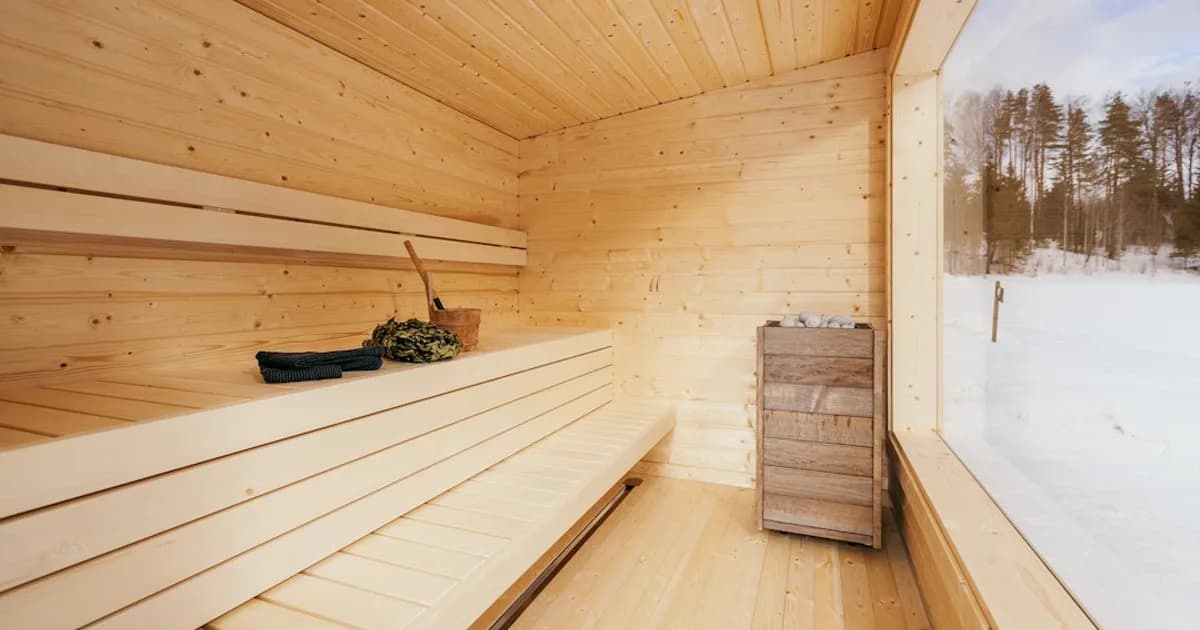
East Bethel is a short drive from Ham Lake, Cedar, Oak Grove, St. Francis, Isanti and the Forest Lake side, which puts a sauna session roughly on the way home from most North-Metro ice. We've written about planning a sauna evening after a day on the ice before, and the practical version is that late access matters most during ice season, because you're rarely off the lake before five. Our infrared sauna sessions in East Bethel run on 24/7 member access for that reason. Keep dry clothes in the truck, come straight in, and stretch at home afterward while you're still warm.
Cold Plunge, Red Light and Salt Across an Ice-Fishing Week
Where the plunge actually fits
Here's the part that surprises people. If you just spent six hours in the cold, the plunge isn't your post-trip move — save it for the other days of the week, or use it as a short finisher after the sauna if you like contrast work. When you do, Cleveland Clinic's parameters are worth following: water no colder than 40°F, 50 to 59°F while you are new to it, five minutes as a hard ceiling, one to two minutes starting out, and once or twice a week at first — then dry off and get warm right away.
And let's be straight about what the evidence supports. A review of 17 randomized trials found that cold-water immersion below 15°C left people with less muscle soreness than passive rest at 24, 48, 72 and 96 hours afterward — but no better than warm-water or contrast immersion, and the trials were small and varied enough that the authors couldn't pin down an optimal temperature or duration. The plunge is a genuinely good tool if you like it. It isn't the centerpiece, and the heat is doing plenty on its own.
Cold immersion isn't for everyone, either. Cleveland Clinic advises people with heart disease, high blood pressure, diabetes, poor circulation, peripheral neuropathy, or pregnancy complications to talk with a healthcare provider first. If that's you, the cold plunge at 5D is something to ask about before you book, not after.
The low-effort midweek options
Four months is a long season, and nobody holds a routine that feels like homework. That's what the red light panels and the salt room are for — a Tuesday evening where you sit in a warm dim space for twenty minutes and ask nothing of yourself. A realistic weekly rhythm for a December-through-March fisher: one heat session after your trip, one low-effort session midweek, stretching every day. If you're going weekly from first ice to last, a membership that covers the whole season changes the math against booking one-offs.
Frequently Asked Questions
Why am I so sore after ice fishing when I barely moved all day?
Two things stack up. Cold pulls blood away from your arms and legs to protect your core, so those muscles work short on oxygen — stiff, inefficient, quick to tire even under light load. Then add six hours hunched over a hole with your shoulders up around your ears, plus shivering running your metabolism several times higher than normal. Soreness that eases as you move and stretch is the ordinary kind; pain that gets worse the more you use it is worth having looked at by a professional.
Should I do the cold plunge after a day on the ice, or is that overkill?
Most anglers we talk to want heat first, not more cold — you've already had your cold exposure, and the goal when you walk in the door is rewarming. If you enjoy contrast work, a short plunge after the sauna is a reasonable finish, and Cleveland Clinic's guidance is water no colder than 40°F, five minutes maximum, one to two minutes while you're new to it. If you have heart disease, high blood pressure, diabetes, circulation issues or you're pregnant, talk with your healthcare provider before cold immersion.
How long after getting off the lake should I book a session?
Same evening is ideal if you can swing it, which is why late slots matter during ice season. That said, the infrared sauna research measuring reduced soreness and preserved power looked at effects 14 hours out, so a next-day session isn't a wasted trip. Our walkthrough of how a 30-to-50-minute contrast visit is timed is a useful starting point for planning the evening.
What should I actually do in the ten minutes before I head out to the lake?
Move your whole body, not just the parts you think you'll use — brisk walking, squats, lunges, knee lifts, arm circles, torso twists. The heat and blood flow you generate make muscles more pliable and less likely to strain. Save the long held stretches for after you're home and warm.
Making It Through to Last Ice
The stiffness after a day on the ice isn't just the sitting. It's the cold, working on your circulation and your nerves for six straight hours while you hold still — which is good news, because it means a routine actually moves the needle instead of leaving you to wait it out.
Warm up for ten minutes in the garage. Layer properly and watch the wind chill. Rewarm on purpose when you get home, then stretch. Pick one post-trip heat session and one easy midweek session, and hold that pattern from first ice to last. Come March, your back will know the difference.
This article is for general wellness and educational purposes only and is not medical advice. 5D Wellness services are not a substitute for professional medical care. Results vary by individual. Consult a qualified healthcare provider before starting any new wellness practice, especially if you are pregnant or have a medical condition.
This article is for general information only and is not medical advice.